
AI Alerting & Event Workflows
An AI event becomes useful when it reaches the right person with enough context to decide what to do. Alerting design connects a camera or sensor condition to a supported analysis platform, the network, a receiving service and an agreed human response.
Email, text/SMS, mobile apps, alarm outputs and control room systems are possible parts of that design, but availability depends on the selected equipment, platform and integrations.
Video unavailable. Follow the illustrated workflow below.
THE EVENT JOURNEY
Event → secure delivery → acknowledgement → response
Detect
A supported source creates a named candidate event with a location and time.
Analyse
Rules, priority and operating schedules determine the agreed event workflow.
Notify
Email, SMS, app, alarm-output or control-room interfaces deliver context where supported.
Acknowledge
A nominated person confirms receipt; successful delivery alone is not acknowledgement.
Escalate
Unacknowledged events follow an agreed alternative-recipient or monitoring procedure.
Resolve
People verify the situation, take the appropriate action and record the outcome for review.
Illustrative sequence, not a detection-speed demonstration. Capabilities and notification channels depend on the selected equipment, platform and agreed response workflow.
Give each event a clear meaning
An event record should identify the site, location, device or rule, time and condition that triggered it. Supporting information may include a still image, clip, count, sensor zone or measured value where available. Use names that the receiving team understands.
A camera's technical address is rarely enough to tell a facilities responder which plant room or entrance needs attention.
Separate event classes rather than sending every condition as a generic alarm. A queue threshold may be an operational request, a device-offline message is a technical fault, and a possible safety-related event needs its own review and escalation procedure. Priority should follow the agreed use case and responsibilities.
The presence of an AI label does not automatically make an event urgent or verified.
Choose channels for the people using them
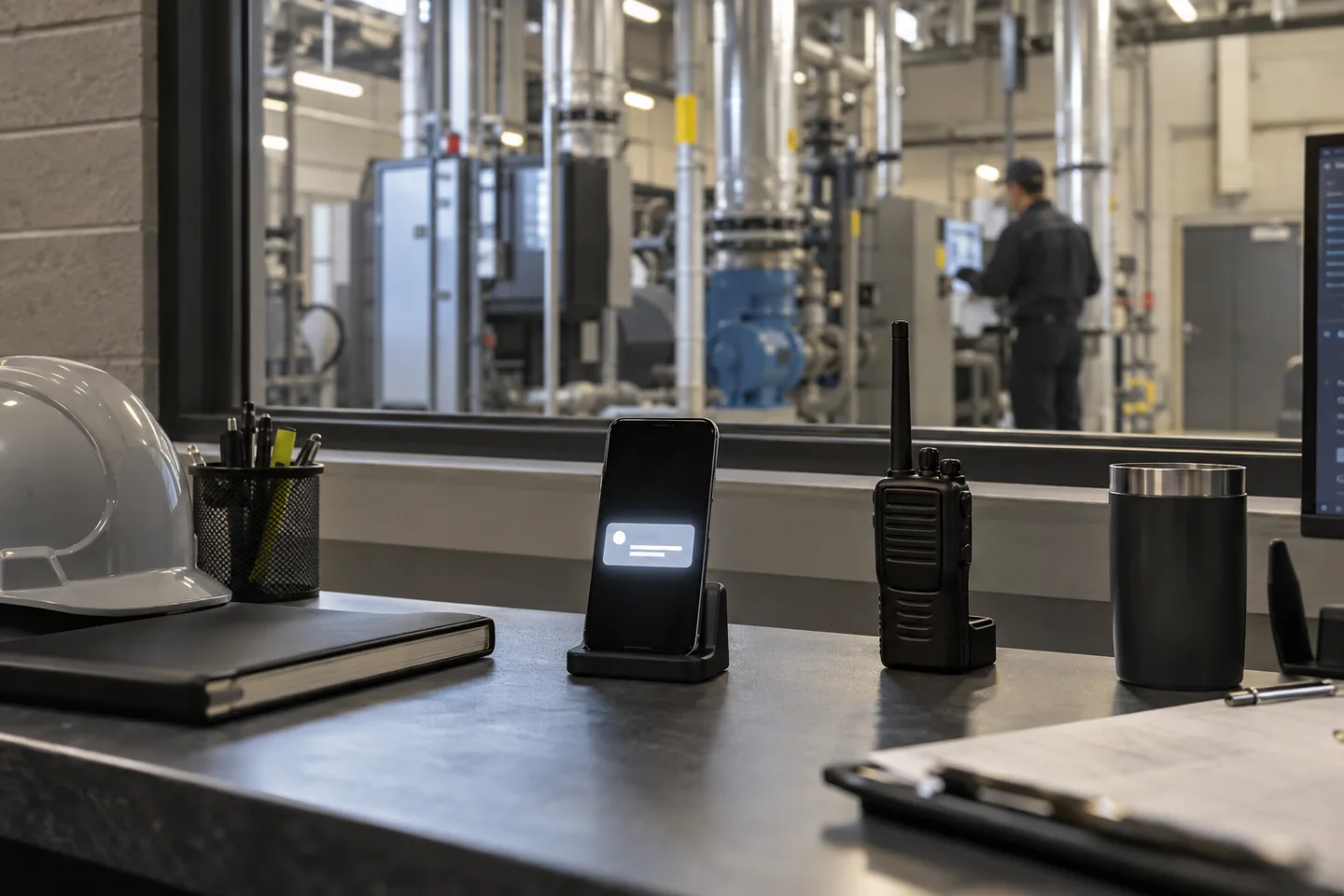
Email can provide context and a record, but mailbox delivery is not proof that somebody has read or accepted an event. SMS may be useful for nominated mobile recipients, but usually requires an appropriate platform or messaging service and depends on its delivery arrangements.
App notifications depend on supported software, user permissions, device settings and connectivity. These dependencies should be included in testing and handover.
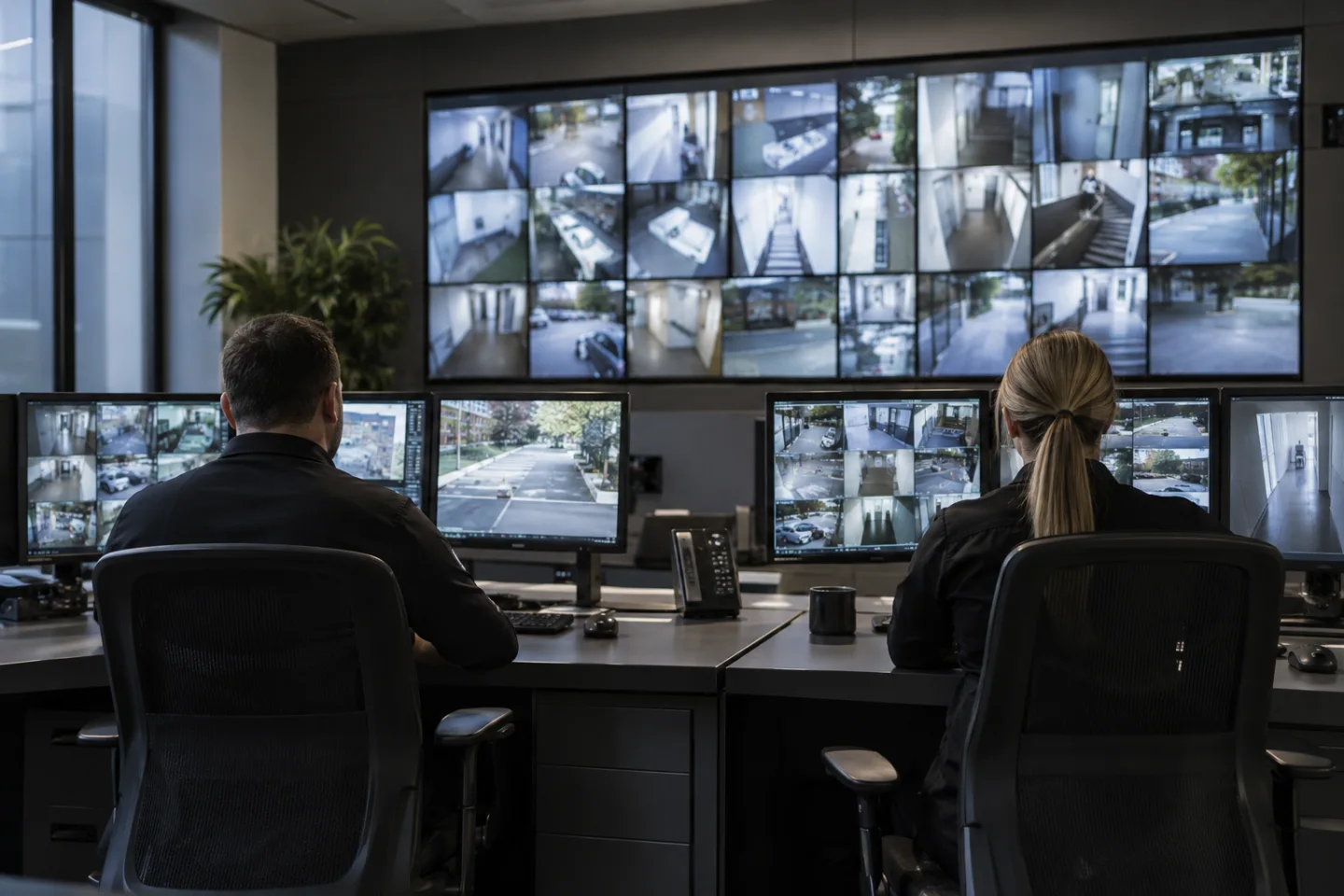
A control room or monitoring platform may provide a managed event queue, assignment, acknowledgement and review history. An alarm output can connect to a compatible local indication or another agreed interface. It is not automatically a certified safety output or permission to operate connected equipment.
Each destination should have a defined purpose, owner and expected response; adding more channels does not compensate for unclear responsibility.
Build a deliberate escalation process
The workflow should describe what happens when an event is accepted, left unresolved or not delivered. A technical delivery acknowledgement is different from a human accepting responsibility. Decide who is contacted next, which information is carried forward and how duplicate events are grouped.
For a continuing condition, repeated messages may need a cooldown or escalation rule rather than an unrestricted flood of notifications.
Schedules, staff cover and contact changes matter to 24/7 monitoring. A continuously configured analytics rule is not the same as a staffed response service. Agree arrangements for nights, weekends, maintenance windows and periods when a primary recipient is unavailable. If the intended receiving platform cannot provide the required workflow, that limitation should be identified before the camera feature is treated as an operational solution.
Connect platforms through supported interfaces
An event may originate in camera-edge analytics, a VMS, an analytics server or a sensor gateway. Supported connectors, APIs, webhooks, messaging interfaces or alarm contacts may carry it to another system. Confirm the interface, required licence, authentication method and data fields.
Two networked products do not automatically exchange usable event information merely because they are connected to the same switch.
The network scope should include addressing, time synchronisation, routing, firewall policy and controlled remote access. Use the minimum connectivity needed for the agreed integration. A remote monitoring service may require an approved secure connection rather than broad access to the camera network.
Keep credentials and administrative permissions under the organisation's control and assign responsibility for updates and support.
Make failures visible
Power loss, unavailable cameras, interrupted WAN connectivity, expired service credentials and a failed notification destination can affect the chain. Agree which faults the platform can report and where those reports go. A system that produces no events may be observing normal activity, but it may also have lost a critical component.
Monitoring health needs to be distinguishable from the event conditions being monitored.
Where buffering, retry or alternative-path behaviour is supported, configure and test it against the operational requirement. Do not imply guaranteed delivery or uninterrupted service. A delayed message should retain its original event time so the recipient can recognise its age.
After a connection returns, grouping and replay behaviour should avoid overwhelming the team with confusing duplicates.
Keep an appropriate review trail
Useful records may include the original event, destination, delivery result, acknowledgement, operator notes and final disposition. Agree which records are necessary, who can access them and how long they remain available. Images of staff, visitors or welfare events may need more restricted handling than an aggregate operational count.
Export and integration requirements should be checked against the selected platform's actual capabilities.
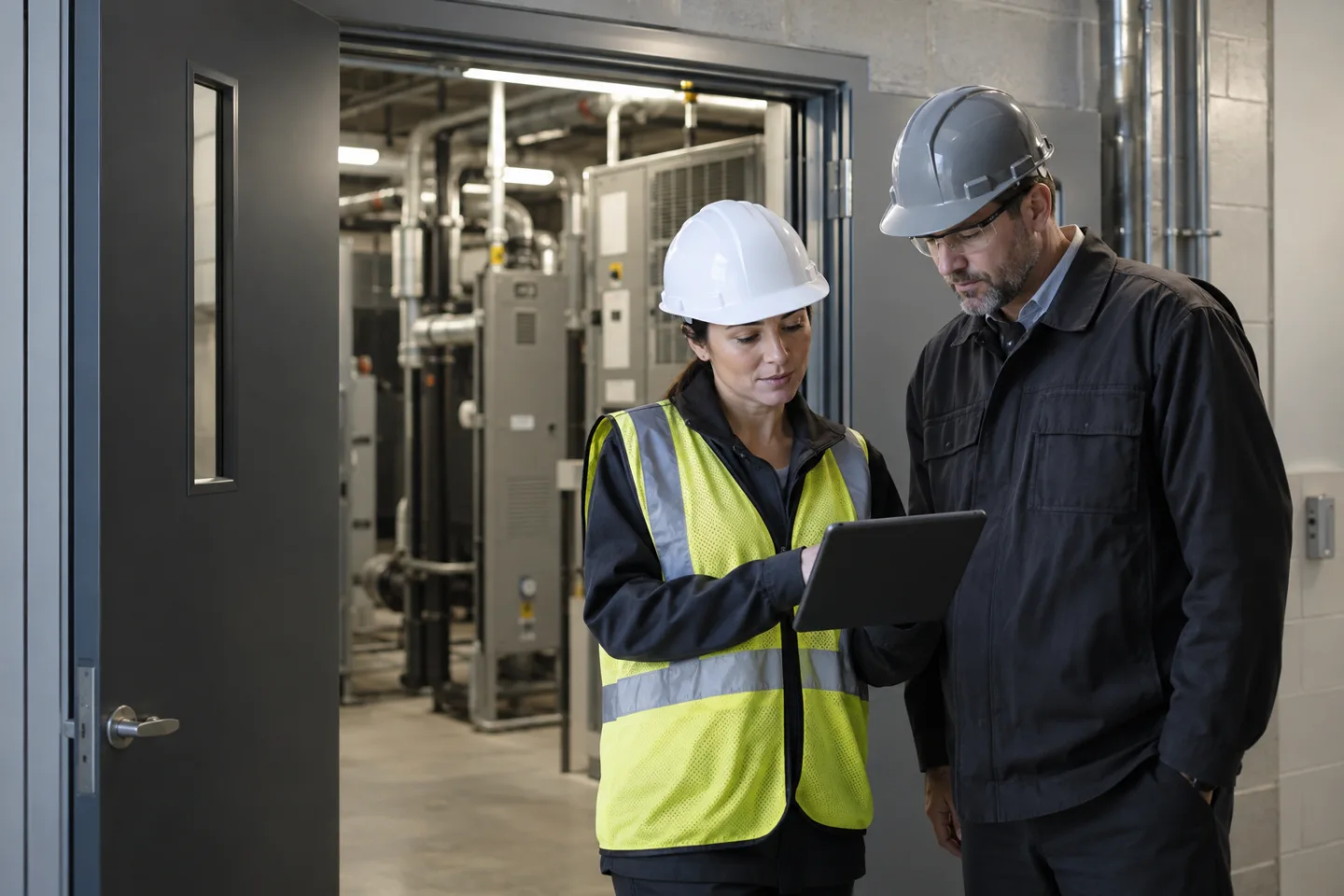
Commissioning should exercise the complete chain with approved test events: source, analysis, network, notification, review and escalation. Confirm normal and out-of-hours routing, the contents of each message and the behaviour during a representative communications failure. IS Security can scope the physical installation and event interfaces as one coordinated system, with clear ownership of the receiving service and the human decisions that follow.
From a possible event to a useful response.
Event → secure delivery → acknowledgement → response. Open each stage to explore its role. This is an illustrative workflow; it does not analyse live footage or send notifications.
01 / OBSERVECamera / sensor / VMS event
The monitored condition is: named event with time and location. Select the device, field of view and installation position for this specific task. Record obstructions, lighting, power and maintenance requirements before relying on the event stream.
02 / INTERPRETEvent broker / monitoring integration
Apply priority, routing and escalation policy. The selected platform must support the intended event and expose a usable interface. Test representative events and unwanted triggers; an analytics output is a candidate for review, not proof of what happened.
03 / CONNECTLAN → firewall → secure platform
Carry authorised event data through the local switch or sensor gateway and an approved network path. Size bandwidth for any accompanying clip. Protect accounts and interfaces, supervise connection loss and agree retry behaviour where the platform supports it.
04 / RESPONDEmail / SMS / app / control room
Deliver the location, event type and time to the agreed recipient. A person verifies the available context, follows the site response procedure and records the outcome. Delivery, acknowledgement and resolution are different states and should be reviewed separately.
Where supported by the selected camera, sensor, VMS or analytics platform. Safety-related analytics provide supplementary operational awareness and do not replace dedicated certified fire or life-safety systems where required. The final design must define the equipment, event interfaces and responsible response team.
Reach the people who can act.
Available outputs depend on the selected platform, licences and agreed integrations. Open a channel for practical delivery considerations.
Send event context and a secure review link to an authorised mailbox where supported. Agree recipients and inbox monitoring; acceptance by a mail server does not confirm that a person has read or acted on the message.
Text / SMS
Use a supported gateway or monitoring integration for concise location and priority messages. Confirm service availability, costs and delivery reporting. Sensitive footage should stay within the authorised platform rather than an unrestricted text message.
Mobile apps
A supported application can present event details and acknowledgement controls to authorised users. Test notification permissions, connectivity and out-of-hours coverage. A silenced or offline handset needs a planned alternative recipient or escalation route.
Alarm outputs
A compatible interface may trigger an approved operational sounder, relay or indicator. Define supervision, reset behaviour and responsibility. Do not connect analytics directly to hazardous equipment or alter certified safety functions without the appropriate engineered design.
Control room / monitoring platform
Route supported events into the operator workflow with a consistent site identifier and priority. Give reviewers enough context to distinguish an actionable event from an unwanted trigger, with access restricted to their responsibilities.
Escalation & event review
Define who receives an unacknowledged event, how long the initial team has to respond and how closure is recorded. Review failed deliveries, recurring unwanted alerts and staffing gaps alongside the detection rules.
Plan the complete monitoring chain.
Start with the event, the operating environment and the person responsible for responding. Share existing equipment details, site plans and integration requirements with the technical team.