Restricted Area Detection
Restricted-area detection helps a team become aware of configured activity within a defined no-entry, staff-only or controlled zone. A supported camera or analytics platform may flag a person or vehicle crossing a boundary or entering an area. Access-control events or dedicated sensors may provide additional context.
The result is an operational event for review, not an automatic determination that the activity is unauthorised.
Video unavailable. Follow the illustrated workflow below.
THE EVENT JOURNEY
Technical threshold → zone event → authorised review
Monitor a threshold
A person approaches or enters a staff-only or controlled technical area.
Evaluate zone context
Supported zone analytics can be reviewed alongside access events where integration is available.
Reach the responsible team
A secure event path can inform site security, a vessel team or remote operations.
Confirm authorisation
People review the circumstances and follow the site procedure; the camera does not independently establish access rights.
Illustrative sequence, not a detection-speed demonstration. Capabilities and notification channels depend on the selected equipment, platform and agreed response workflow.
Put the boundary in the right place
A useful zone follows the site's actual operating arrangements. A staff-only doorway, technical room approach, hazardous work boundary or shipboard equipment-space entrance may each require a different rule. Agree where the condition begins, which directions matter and when the rule should operate.
A boundary that includes an ordinary walkway can produce avoidable events and confuse the receiving team.
Temporary work, maintenance access and supervised visitors need to be considered. The people receiving an event should have a way to check authorised activity without relying on the image alone. A person crossing a virtual line may be allowed to enter.
Conversely, a camera event may not be available if the view is obstructed or the platform does not support the intended object or scene conditions.
Combine useful signals without assuming compatibility
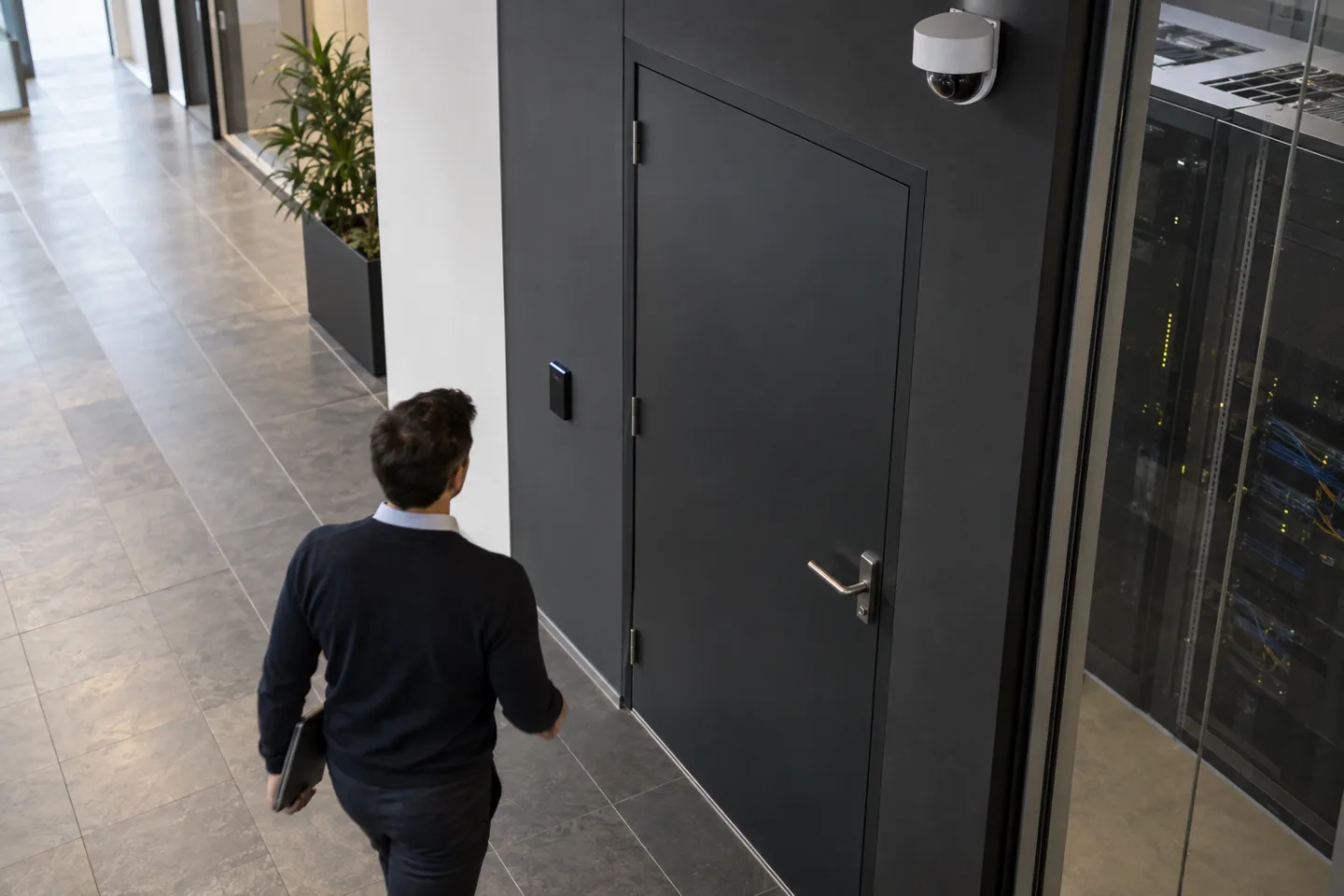
A camera can provide visual information, while an access controller, door contact or other sensor may provide a separate event. A supported integration can bring those records together for an operator, but timing, device identifiers and platform interfaces need to be confirmed.
The fact that two products use a network connection does not mean their event data can automatically be correlated.
For a technical or hazardous area, the required physical controls and dedicated safety arrangements remain essential. Analytics does not replace suitable barriers, access permissions, interlocks, supervision or certified systems where required. Any proposed control output must be designed for its specific purpose.
A supplementary alert should not be described as preventing entry or guaranteeing that a zone is clear.
Use the approach across different environments
Offices and commercial buildings may monitor staff-only or plant access routes. Retail operations may want review of activity around stockroom entrances or back-of-house areas. Warehouses and industrial sites may have designated equipment zones, controlled stores or temporary maintenance boundaries that justify a carefully scoped event rule.
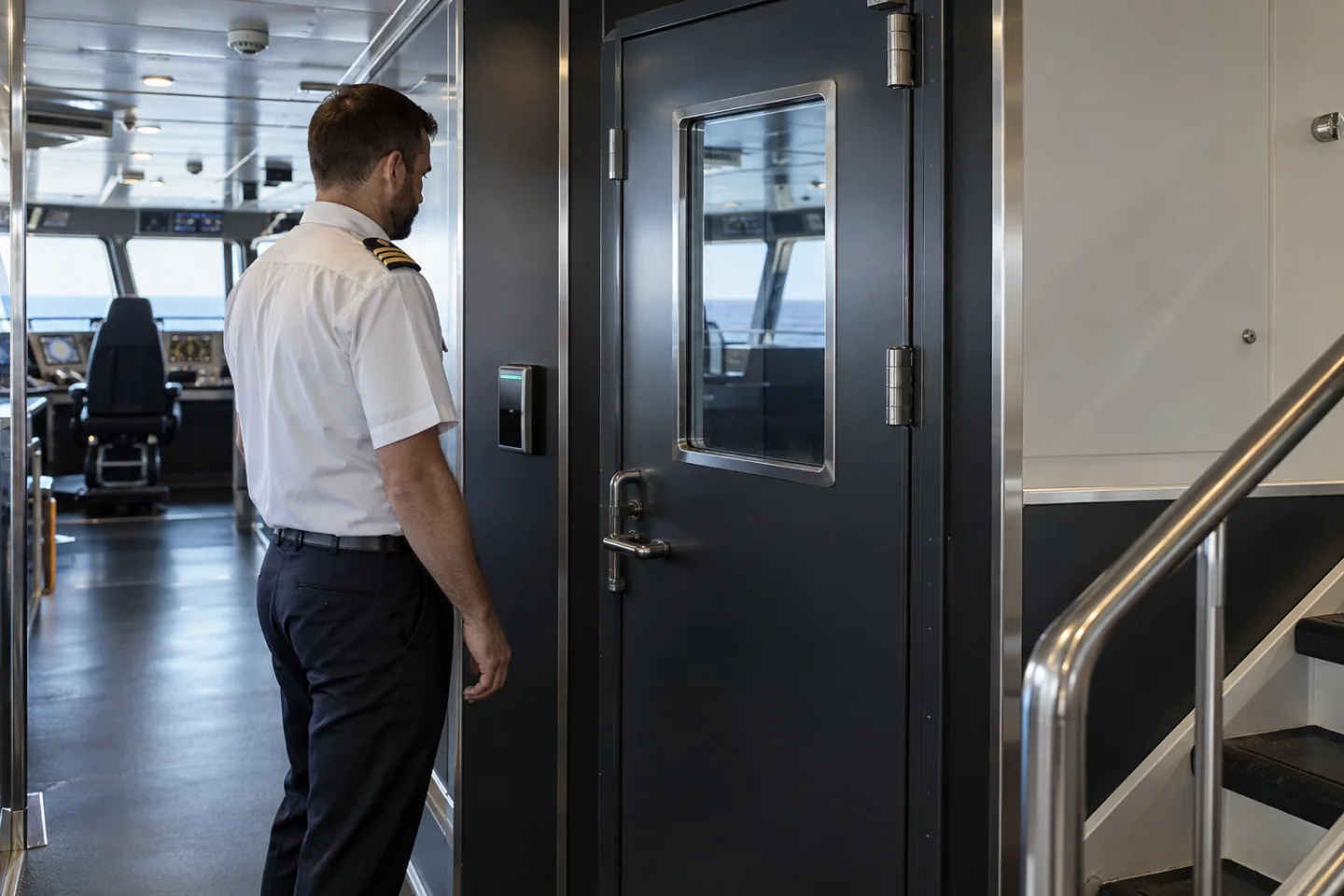
Vessels may need awareness around deck or technical-area access, coordinated with the onboard team and established procedures. Camera and sensor suitability, installation conditions and operational ownership must be checked for the vessel environment. Remote sites may use a networked event to help an off-site team review activity, but the response plan must account for communications availability and the practical time needed to arrange attendance.

Route an event with access context
The event message should identify the site, zone, timestamp, rule and available supporting image or sensor reference. A VMS or monitoring platform may present it alongside relevant access information where the integration supports that use. Email, text/SMS and app notifications can extend awareness to nominated recipients; a control room queue can support acknowledgement, review and escalation.
The operator follows the site's procedure to determine whether the activity is expected and what action is justified. An alarm output, local indication or remote action requires a compatible interface and agreed authority. Avoid an arrangement in which several teams receive the same ambiguous event but no one owns it.
Clear location labels and responsibilities make the notification more useful than a generic warning from an unnamed camera.
Test authorised and unexpected activity
Commissioning should cover the intended crossing or presence condition as well as legitimate movements close to the boundary. Check lighting, obstructions, direction, schedules and reset behaviour. Verify the event destination and what happens if the camera, sensor or network connection fails.
For integrated access events, confirm that clocks and identifiers allow an operator to understand the sequence.
Record the accepted zone, supported function, limitations and maintenance responsibilities. Revisit the configuration when partitions, doorways, access policies or work areas change. Access to images and records should be limited to the agreed purpose and responsible users. IS Security can scope the physical installation, cabling, network segmentation and monitoring interfaces so that restricted-area awareness fits the wider operational system rather than becoming an isolated camera feature.
From a possible event to a useful response.
Technical threshold → zone event → authorised review. Open each stage to explore its role. This is an illustrative workflow; it does not analyse live footage or send notifications.
01 / OBSERVEZone camera + access event
The monitored condition is: person enters a monitored no-entry zone. Select the device, field of view and installation position for this specific task. Record obstructions, lighting, power and maintenance requirements before relying on the event stream.
02 / INTERPRETZone rule + supported event correlation
Apply authorised schedule and review context. The selected platform must support the intended event and expose a usable interface. Test representative events and unwanted triggers; an analytics output is a candidate for review, not proof of what happened.
03 / CONNECTLAN → firewall → secure platform
Carry authorised event data through the local switch or sensor gateway and an approved network path. Size bandwidth for any accompanying clip. Protect accounts and interfaces, supervise connection loss and agree retry behaviour where the platform supports it.
04 / RESPONDSite / vessel technical operator
Deliver the location, event type and time to the agreed recipient. A person verifies the available context, follows the site response procedure and records the outcome. Delivery, acknowledgement and resolution are different states and should be reviewed separately.
Where supported by the selected camera, sensor, VMS or analytics platform. Safety-related analytics provide supplementary operational awareness and do not replace dedicated certified fire or life-safety systems where required. The final design must define the equipment, event interfaces and responsible response team.
Reach the people who can act.
Available outputs depend on the selected platform, licences and agreed integrations. Open a channel for practical delivery considerations.
Send event context and a secure review link to an authorised mailbox where supported. Agree recipients and inbox monitoring; acceptance by a mail server does not confirm that a person has read or acted on the message.
Text / SMS
Use a supported gateway or monitoring integration for concise location and priority messages. Confirm service availability, costs and delivery reporting. Sensitive footage should stay within the authorised platform rather than an unrestricted text message.
Mobile apps
A supported application can present event details and acknowledgement controls to authorised users. Test notification permissions, connectivity and out-of-hours coverage. A silenced or offline handset needs a planned alternative recipient or escalation route.
Alarm outputs
A compatible interface may trigger an approved operational sounder, relay or indicator. Define supervision, reset behaviour and responsibility. Do not connect analytics directly to hazardous equipment or alter certified safety functions without the appropriate engineered design.
Control room / monitoring platform
Route supported events into the operator workflow with a consistent site identifier and priority. Give reviewers enough context to distinguish an actionable event from an unwanted trigger, with access restricted to their responsibilities.
Escalation & event review
Define who receives an unacknowledged event, how long the initial team has to respond and how closure is recorded. Review failed deliveries, recurring unwanted alerts and staffing gaps alongside the detection rules.
Plan the complete monitoring chain.
Start with the event, the operating environment and the person responsible for responding. Share existing equipment details, site plans and integration requirements with the technical team.