01
Remote site networks
Data outlets, network cabinets and Ethernet connections for agreed accommodation, office and equipment areas.


Copper, fibre and network infrastructure for remote sites, with offshore installation requirements assessed before deployment is agreed.
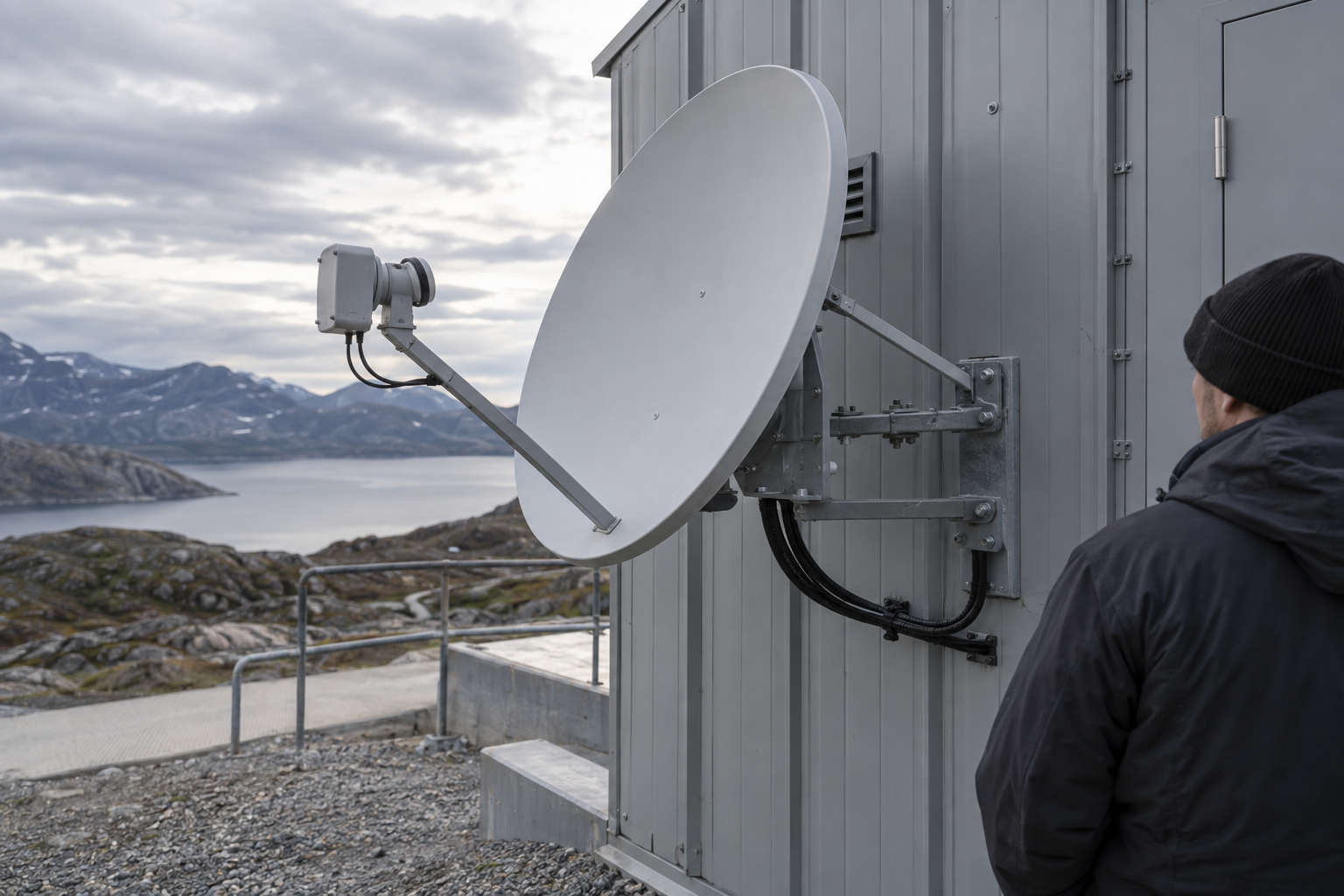
IS Security can scope remote-site structured cabling, network equipment and connectivity as one installation. Offshore structured cabling and offshore fibre installation are proposed capabilities subject to the operator’s site requirements and deployment feasibility. We do not present offshore platform work as completed project experience.
Plan containment, copper and fibre routes, equipment locations and connectivity around the location and available work window.
Remote-site and offshore requirements are assessed per project, including access, environment, equipment compatibility and the proposed attendance window.
Physical infrastructure, connected equipment and a clearly agreed installation scope.
Data outlets, network cabinets and Ethernet connections for agreed accommodation, office and equipment areas.
Select local copper links and fibre backbone routes around distances, environment and compatible network equipment.
Review containment, exposure, equipment enclosures and maintenance access with the site team before choosing installation materials.
Confirm operator access rules, personnel requirements, permits and any specialist approvals needed before accepting the scope.
Bring CCTV, Wi-Fi, firewall equipment and supported remote connectivity into the same network plan.
Agree labels, spare capacity, replacement arrangements and remote-support responsibilities for sites that are difficult to revisit.
Assess cabling feasibility for remote and difficult-access environments. Explore the decisions that shape the installation, interfaces and handover.
Remote work starts with the practical conditions of reaching the site and remaining there long enough to complete the agreed scope. Describe the location, access method, working window and restrictions on tools or materials. Offshore enquiries may involve additional owner requirements, permits and specialist access arrangements that must be reviewed before any commitment. Capability wording does not establish experience at a particular platform or installation. We assess the proposed cabling and connected-system work against the actual environment, available resources and the responsibilities of the parties controlling access.
A remote installation may not have a nearby supplier or a second attendance window. Build a verified equipment and materials schedule, including compatible connectors, mounting parts and the agreed spare allowance. Confirm what can be checked before mobilisation and which existing conditions remain uncertain. Photographs and drawings can reduce uncertainty, but they do not replace every physical survey. Identify acceptable alternatives in advance where the specification allows them. The purpose is to make decisions early, not to carry an unlimited assortment of unverified equipment to site.
Discuss exposure, enclosure location, cable protection and the requirements imposed by the asset owner. A product described for outdoor use is not automatically suitable for every offshore or industrial environment. Assign responsibility for material approval, penetrations, power and any specialist work outside the communications scope. Where remote connectivity is included, plan the local network as well as the external link. The handover should identify test results, installed routes and remaining constraints in a form the remote team can use without relying on an immediate return visit.
Confirm access, owner requirements, logistics and the permitted work window.
Verify materials and interfaces before mobilisation.
Deliver route records, acceptance evidence and clear unresolved actions.
Use these checkpoints to discuss the scope. The final test method, responsibilities and acceptance evidence depend on the selected system and agreed work.
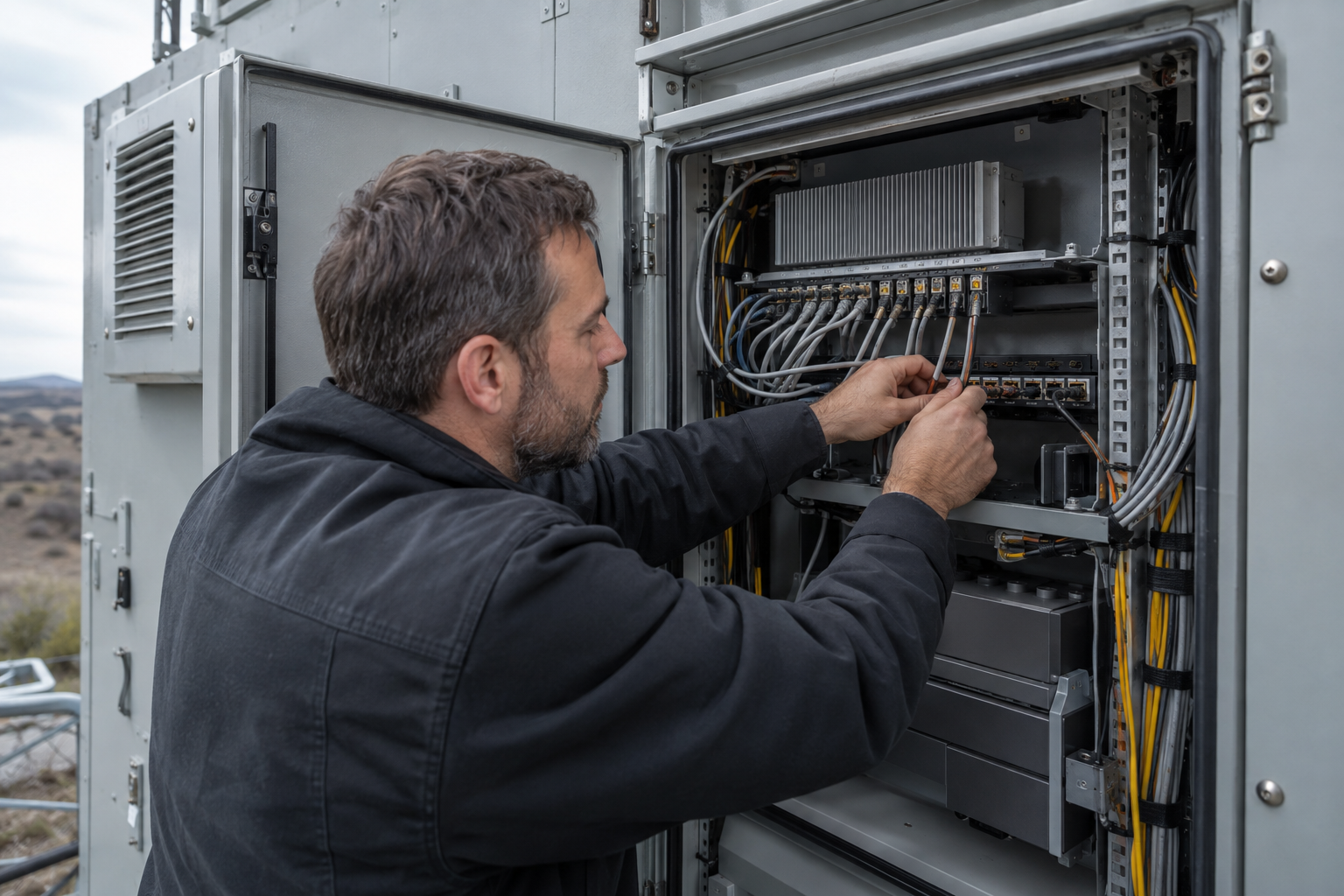
Remote-site cabling work benefits from a detailed equipment and materials schedule before mobilisation. Confirm the route, enclosure locations, available power and the conditions in which the installation will operate. Identify who receives deliveries and whether materials can be stored securely. For proposed offshore work, the operator must confirm access, personnel and installation requirements before feasibility is agreed. These assessments do not imply a claim of completed offshore platform projects.
An isolated site may have limited technical staff and a narrow maintenance window. Agree clear cabinet, cable and equipment identifiers that local personnel can use when reporting a problem. Establish which spare components are appropriate to hold on site and who can authorise replacement. If satellite connectivity is included, separate the external service from the local network distribution so a reported outage can be described at the correct boundary.
A missing enclosure, inaccessible route or unconfirmed connection can be expensive to resolve after arrival. Review readiness evidence with the site contact before travel is finalised. Identify what can be completed if one dependency remains unavailable and how unfinished work will be recorded. Commission agreed links and representative endpoints, then provide a concise exception list alongside route and equipment records. Future extensions should use that baseline rather than assume that every item in the original proposal was installed.
Explore installation requirements, interfaces and the information needed before work begins.
An offshore network cabling enquiry must identify the installation environment and the operator’s requirements for access, competence, equipment and work control. Any hazardous-area or specialist installation requirement needs explicit assessment and an appropriate delivery arrangement. General commercial capability is not a claim of those approvals.
Remote-site IT infrastructure may need equipment that can be maintained by an on-site team between visits. Plan cabinet access, labelling, cable management and spares around that reality. Cat5e, Cat6 or Cat6A local links and fibre backbones are selected against the agreed application and environmental specification.
Provide the location, plans, equipment list, power and connectivity arrangements, required attendance dates and site-entry rules. Identify existing faults and infrastructure that might be retained. Repairs, replacement and additions can be phased when a full rebuild is unnecessary.
Agree cable tests, any specified certification records, network checks and secure remote-support access before work. Handover should make equipment and routes identifiable to the people remaining on site. International or multi-location attendance is assessed individually; Starlink connectivity can be considered alongside the local cabling where the chosen service is suitable.
Yes. We can coordinate the relevant cabling, network equipment and connected security systems within an agreed scope.
Tell us the site location, the required work, existing equipment and any access or timing constraints. Plans and equipment information can be discussed with the technical team.
Commercial sites. International programmes. Onboard systems.
Installations across all of the US, Europe, the Caribbean, the UK and South Africa, with deployment support in Canada and Panama.
Regional resources · Fly teams · International project support
Explore regions & deployment hubs → DEPLOYMENT NETWORK / ILLUSTRATIVE CONNECTIONS