01
Structured cabling
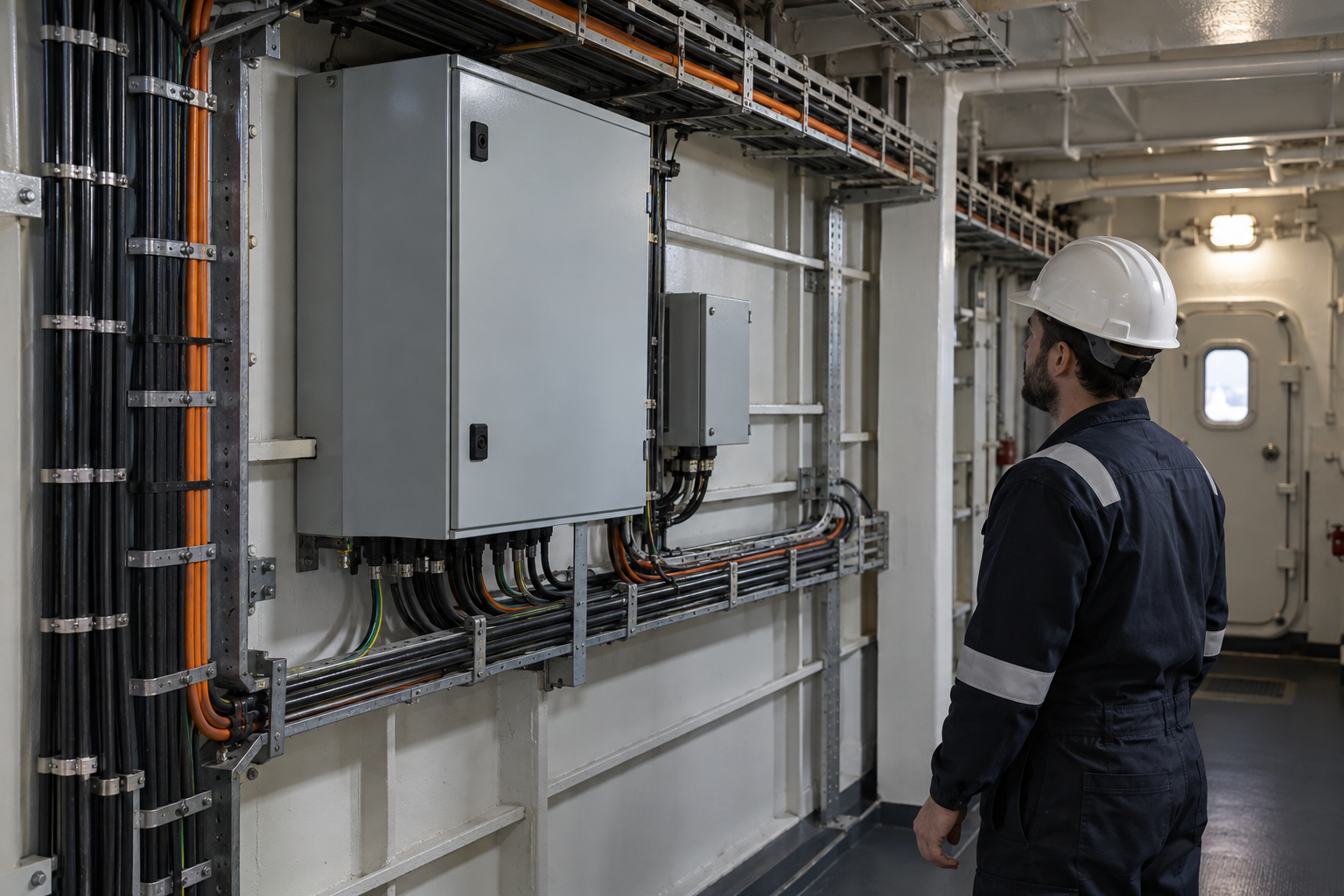
Copper network cabling through vessel infrastructure, with planned routes, organised terminations and identified connections.
Maritime Structured Cabling

IT infrastructure, structured cabling, fibre, Starlink, networks and intelligent security for commercial vessels.
IS Security installs and supports the physical infrastructure and connected equipment that vessel technology relies on. We bring copper and fibre cabling, network cabinets, PoE equipment, CCTV and IT installations together in one coordinated scope. Work is planned around the vessel, access arrangements and the available installation window.
Physical infrastructure, connected equipment and a clearly agreed installation scope.
Copper network cabling through vessel infrastructure, with planned routes, organised terminations and identified connections.
Maritime Structured CablingBackbone fibre between equipment locations, supporting the vessel network and connected technology systems.
Maritime Fibre InstallationNetwork cabinets, switching, PoE infrastructure and equipment connections across onboard technical spaces.
Vessel Network InfrastructureInstallation and replacement of network and IT equipment, coordinated with existing onboard systems.
Maritime IT Systems & Equipment InstallationFault finding, cable replacement and equipment upgrades, with an agreed sequence for testing and handover.
Maritime Repairs & Upgrades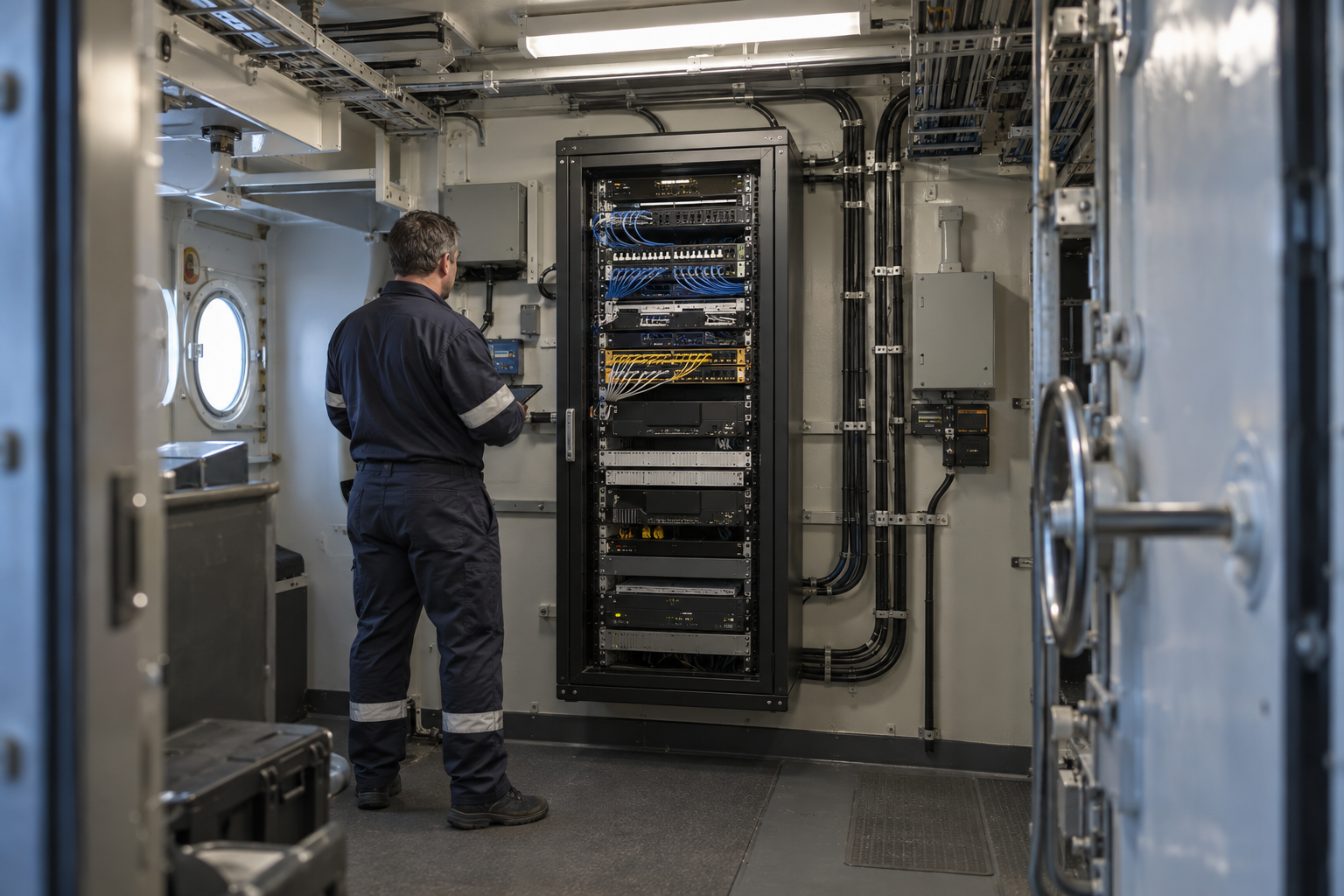
Vessel location, cable access, interfaces and attendance windows shape the agreed installation. The diagram illustrates system relationships, not a completed vessel project.
Find coordinated technology installation for a commercial vessel or fleet. Explore the decisions that shape the installation, interfaces and handover.
A vessel may need cable replacement, network capacity, CCTV coverage and satellite integration during the same attendance. Identify which tasks depend on shared routes, cabinets or system access so they can be coordinated. Provide the vessel location, expected schedule and technical contact, together with available drawings and equipment information. Attendance and materials remain subject to the actual scope and access arrangements. Planning around a vessel does not mean assuming every system aboard it can be altered; agree the boundaries with the responsible technical team.
Crew connectivity, administrative IT, surveillance and specialist vessel systems can have very different owners and requirements. Identify the intended interfaces and separation before proposing a combined network. Do not assume that a spare port makes a connection to an operational system appropriate. The approved design and vessel requirements determine what may communicate and who can authorise changes. IS Security can scope communications infrastructure and supported integration within those boundaries. Any classification, owner or specialist approval needed for the proposed installation should be identified before work begins.
For operators managing more than one vessel, consistent naming and handover structure can be valuable even when physical arrangements differ. Record equipment locations, cable endpoints, relevant network interfaces and tested functions in an agreed format. Distinguish vessel-specific exceptions from the common installation requirement. A follow-up engineer should be able to understand what was installed without treating a photograph as a complete system drawing. Describe any planned repeat work in the enquiry so standardisation, materials and reporting can be considered without assuming every ship has an identical layout.
Identify systems, owners, port access and approval boundaries.
Coordinate routes and equipment without assuming access to critical systems.
Use consistent handover fields while recording each vessel’s exceptions.
Use these checkpoints to discuss the scope. The final test method, responsibilities and acceptance evidence depend on the selected system and agreed work.
Commercial vessel technology installation brings several disciplines into limited technical spaces. A camera addition may need a new PoE connection, extra switching capacity and an approved cable route. A satellite upgrade may depend on the existing firewall and wireless distribution. Record each system, its equipment location and its configuration owner. This lets the vessel team distinguish installation work from decisions retained by the operator, shipyard or specialist supplier. Identify equipment that will remain live during the work.
A port call does not automatically provide access to every compartment or permission for every activity. Identify the spaces required, the working period and the vessel contact coordinating access. Confirm material delivery, storage and prerequisites before mobilisation. Where work spans several visits, agree which systems remain operational between stages. Record routes and unfinished terminations so the next attendance resumes from an accurate baseline rather than an outdated proposal.
Commissioning may require vessel personnel and a shore-based IT contact. Agree representative checks for the affected systems and name the person accepting the results. Record connections, equipment locations, test outcomes and activities postponed by schedule changes. A fleet programme can use common naming and reporting conventions while preserving individual vessel differences. Those records support later maintenance without assuming every vessel has the same network, equipment or cable route.
Explore installation requirements, interfaces and the information needed before work begins.
Starlink installation and integration belongs alongside the vessel’s IT, cable routes and active networking. A terminal needs a suitable mounting position and power connection, then a defined route into the onboard router, firewall and LAN. Wi-Fi distribution, camera connectivity and remote-support access should be considered as distinct requirements.
We coordinate copper and fibre, racks, switches, PoE equipment and supported network-security controls with the selected satellite connection. The vessel team can then review one connected scope rather than separate equipment installations with unclear interfaces.
IS Security combines land-based technical teams, technical resources in Europe and mobile fly teams for planned deployments. For maritime operators, this supports installations and equipment changes coordinated around ports, access arrangements and available work windows. A multi-vessel programme can use a shared technical brief while keeping the existing configuration and responsibilities of each vessel clear.
For a sufficiently large programme, a temporary deployment base can help organise equipment and attendance near the work. Agree the installation specification, commissioning checks, photographs and documentation before the first attendance, then bring the records into centralised reporting. This delivery capability does not imply an office in every country or completed offshore-platform work.
Our maritime offering focuses on large commercial vessels, including cargo and container vessels. Share the vessel type, location and required work so we can assess the project.
Useful starting information includes the vessel location, available access window, affected spaces, route drawings where available, existing equipment and the work required.
Yes. We can scope copper and fibre cabling alongside cabinets, switches, PoE equipment, CCTV and IT installation. Interfaces with existing systems are agreed before work begins.
Commercial sites. International programmes. Onboard systems.
Installations across all of the US, Europe, the Caribbean, the UK and South Africa, with deployment support in Canada and Panama.
Regional resources · Fly teams · International project support
Explore regions & deployment hubs →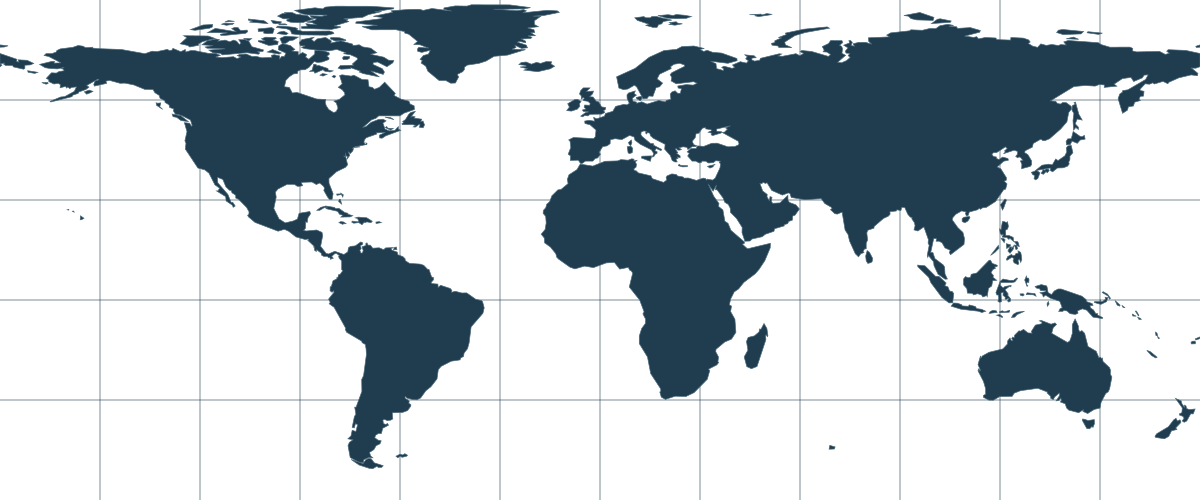 DEPLOYMENT NETWORK / ILLUSTRATIVE CONNECTIONS