01
Distributed cabinets
Network locations arranged around the areas and equipment they serve.


Copper connections and fibre backbones for large warehouse and distribution environments.
Warehouse connectivity can involve multiple cabinets, operational areas and office spaces. We scope copper runs, backbone links and equipment connections together, taking account of the building layout and available installation access.
Physical infrastructure, connected equipment and a clearly agreed installation scope.
Network locations arranged around the areas and equipment they serve.
Backbone routes linking cabinets across the premises.
Data connections for agreed warehouse devices and associated office equipment.
Cabling for compatible cameras and wireless access points at planned locations.
Coordinated routes that account for the physical building and operational access.
Test and label installed connections, with repairs and additions available as requirements change.
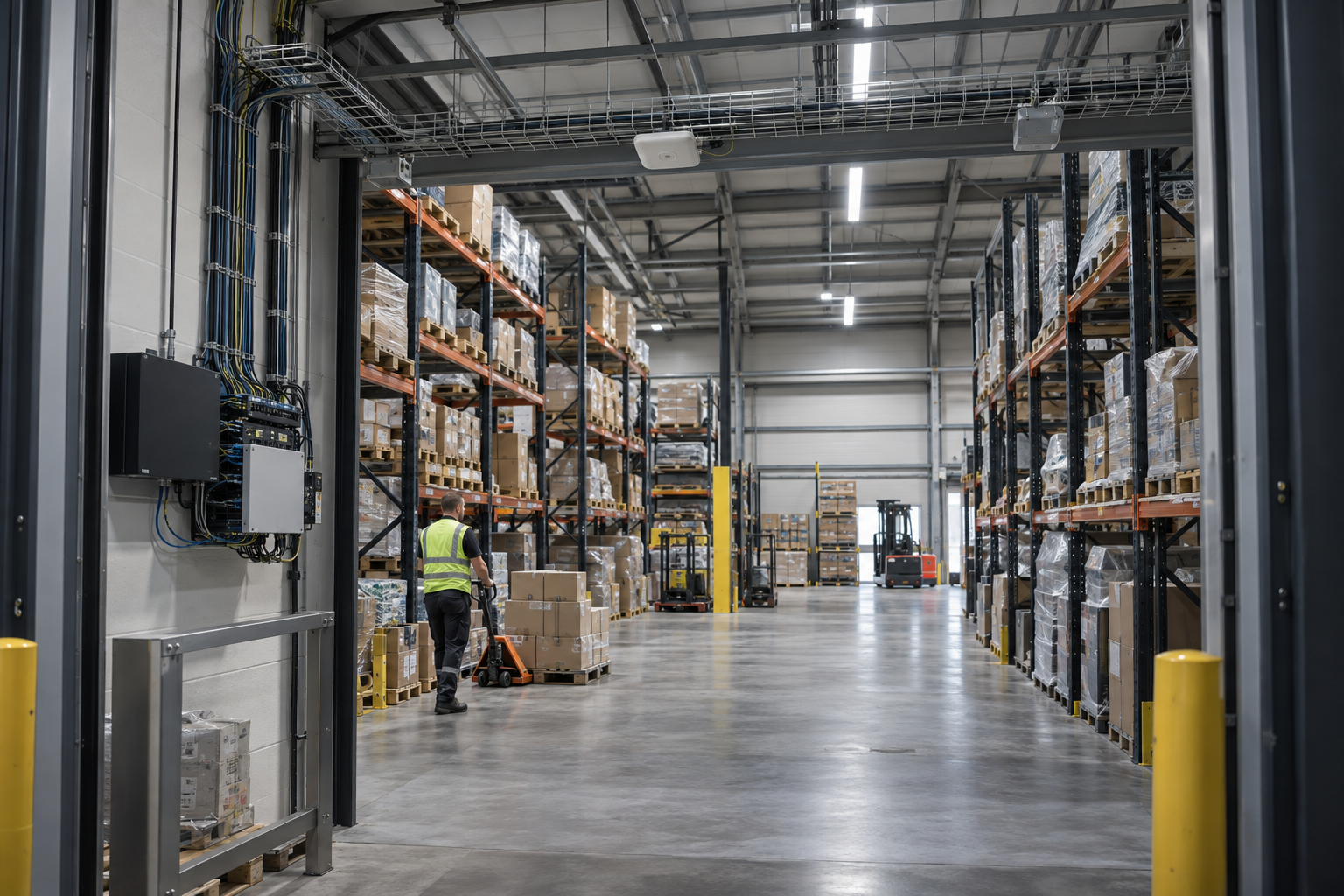
Cabling, networks and security equipment are planned around the people, systems and operations using the space.
Plan warehouse copper and fibre routes for logistics equipment. Explore the decisions that shape the installation, interfaces and handover.
Long aisles and distributed work areas can make one central cabinet impractical for every connection. Review the endpoint locations, proposed routes and required applications before deciding where local cabinets belong. Fibre may provide a backbone between locations while copper serves nearby equipment, subject to the agreed design. Include cameras, wireless access points and fixed operational devices in the schedule. Coordinate cabinet access with racking, vehicle routes and future maintenance, so a theoretically convenient position does not become inaccessible after the warehouse is stocked.
Overhead cabling can require access equipment, operating-area isolation and coordination with the warehouse team. Agree the available window and identify which routes can be completed during each phase. Review cable support and protection alongside the actual site conditions and approved specification. Do not assume high-level access remains available throughout a logistics programme. A route change may affect cable quantities, endpoint reach and the sequence of work. Record such changes in the project plan rather than leaving the installer to resolve them without the responsible team.
Label each connection so it can be matched to its warehouse zone and cabinet. Agree the required copper or optical tests and identify which retained links are included. When active equipment is part of the wider project, schedule checks of representative access points, cameras or other devices after patching. A link record should make physical fault investigation easier even if the application is managed by another provider. Include warehouse plans, intended endpoint positions, operating hours and known access constraints in the enquiry to support a focused survey and scope.
Locate cabinets around zones, route reach and maintenance access.
Schedule supported high-level routes with the warehouse operator.
Match tests and endpoint checks to clear zone and cabinet labels.
Use these checkpoints to discuss the scope. The final test method, responsibilities and acceptance evidence depend on the selected system and agreed work.

Warehouse structured cabling needs a practical relationship between cabinets, routes and operational zones. Identify packing benches, fixed terminals, access points and cameras. Where distributed network spaces are required, coordinate the fibre backbone with local copper cabling. Record a cabinet destination for each endpoint. This provides a clearer scope than a total outlet count and exposes areas needing a separate route or distribution point.
Review route height and availability with the site team. Racking, conveyors and vehicle movements affect when installation and maintenance are possible. Agree arrangements for access equipment and aisle closures. Termination and testing also need cabinet availability, so allow for both ends in the programme. If an operational area is released in stages, label incomplete runs separately from accepted links and record the remaining access dependency.
Identify the operational zone, cabinet and panel position in the outlet schedule. Record test results and authorised drawing changes. Note spare connections and their locations so new packing or scanning equipment can be assessed against known capacity. Investigate existing links before abandoning or extending them during a warehouse reorganisation. Clear records distinguish a device move from work requiring new containment, cabling or additional backbone capacity.
Packing stations can need connections for workstations, label printers and other fixed equipment. Confirm the actual device schedule and location before setting outlet quantities. Agree how cables reach the bench and whether furniture or containment is supplied by another contractor. Record the cabinet destination and label the outlets so a local supervisor can identify a fault accurately. If benches move later, assess the route and termination arrangement before extending patch leads across working areas or treating the original outlet plan as still current.
Explore installation requirements, interfaces and the information needed before work begins.
Warehouse data cabling needs to account for rack layouts, loading areas and network equipment spread across a large building. Review high-level access and routes with the operations team before agreeing cabinet positions. Fibre backbone links can connect distributed network cabinets while copper cabling serves local devices and associated offices.
Cat5e, Cat6 or Cat6A is selected for the agreed link requirements. Cable management and containment must remain accessible as storage layouts change. PoE access points and cameras need both suitable cabling and an agreed switch power budget; access-point cabling positions should follow the wireless design.
For a quote, provide a building plan, racking layout, cabinet locations, equipment list and available installation windows. Identify vehicle routes and areas where access equipment or temporary restrictions will be needed. Agree cutover stages so the affected team knows which connections are changing.
Test and label installed data links and fibre terminations against the agreed scope. Handover should map each outlet to its cabinet and record any retained links or outstanding faults. Repairs, additions and network cabling upgrades can follow the same scheme, including repeated installations across logistics sites and individually assessed international locations.
Yes. We can coordinate the relevant cabling, network equipment and connected security systems within an agreed scope.
Tell us the site location, the required work, existing equipment and any access or timing constraints. Plans and equipment information can be discussed with the technical team.
Commercial sites. International programmes. Onboard systems.
Installations across all of the US, Europe, the Caribbean, the UK and South Africa, with deployment support in Canada and Panama.
Regional resources · Fly teams · International project support
Explore regions & deployment hubs → DEPLOYMENT NETWORK / ILLUSTRATIVE CONNECTIONS