Man Down Detection & Alerts
Man-down detection describes supported systems that flag a possible fall, person-down posture, prolonged immobility or device event for review. The source may be video analytics, a wearable lone-worker device or another dedicated sensor. These approaches have different capabilities and limitations.
The practical objective is to improve awareness of a possible welfare or safety event and connect it to a defined human response.
Video unavailable. Follow the illustrated workflow below.
THE EVENT JOURNEY
Possible event → duration check → human response
Observe posture or immobility
A supported camera or worker device observes a possible event within its coverage.
Apply supported timing
A configured posture or duration rule surfaces a candidate. The illustration does not demonstrate guaranteed fall detection.
Notify response contacts
The selected platform routes context to an available control room, mobile app or agreed response contact.
Verify and assist
A responsible person checks the situation and follows the site assistance procedure; dedicated safety arrangements remain separate.
Illustrative sequence, not a detection-speed demonstration. Capabilities and notification channels depend on the selected equipment, platform and agreed response workflow.
Start with the working situation
A worker in an open warehouse aisle, a technician behind equipment and someone moving through several rooms present different monitoring problems. Camera-based analytics depends on a useful view of the person and the supported rule. A wearable device may remain with the worker, but it introduces device selection, wearing, charging, communications and testing requirements.
Neither approach should be described as universally suitable.
The organisation should identify the work pattern, areas involved, expected movements and people responsible for responding. A person may legitimately kneel, sit, rest or work close to the floor. Those activities need to be considered when configuring a video rule or device threshold.
A possible event is a prompt to check the situation; it is not a medical diagnosis or proof that a person has been injured.
Understand what the selected platform can detect
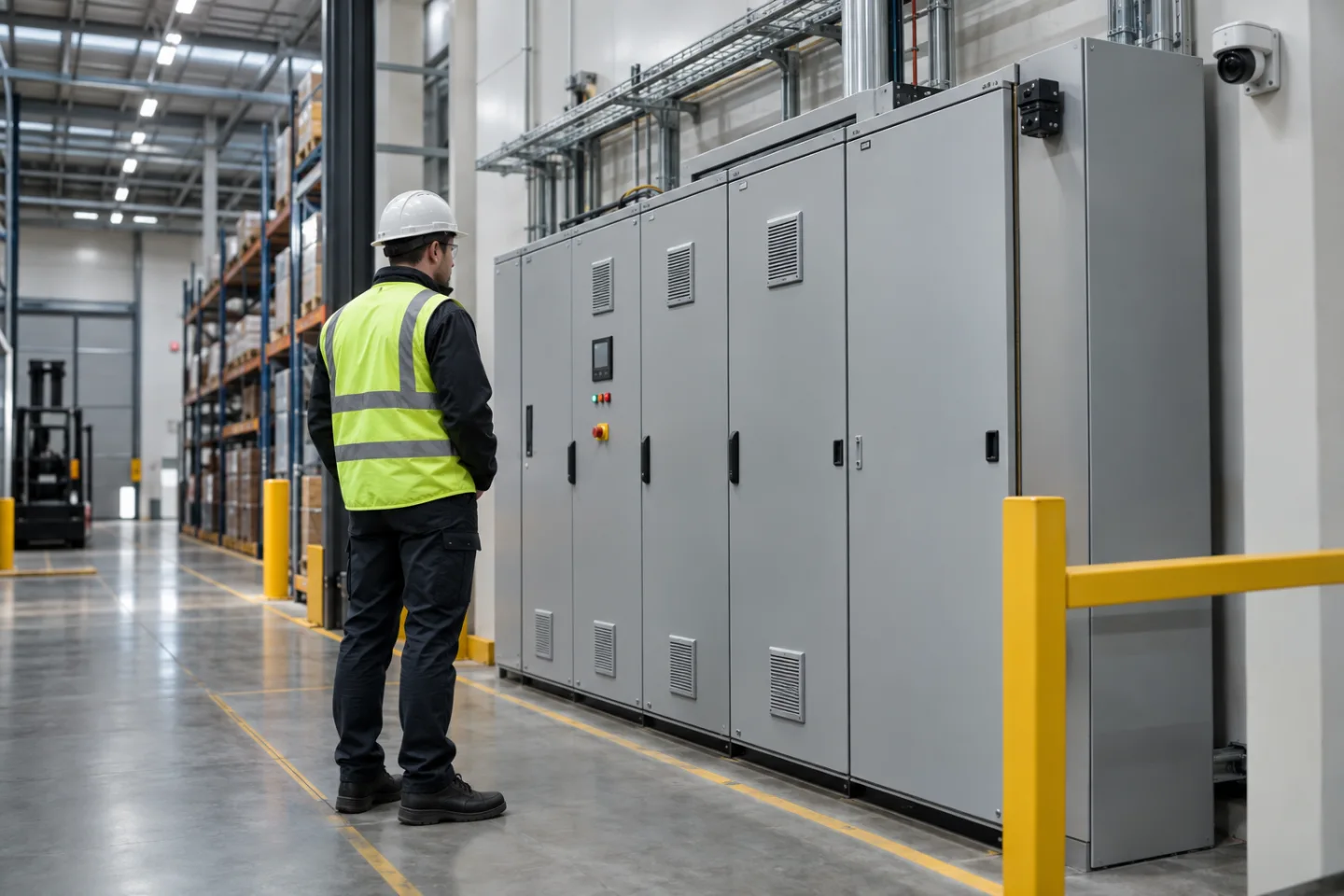
Some platforms may support a defined fall or person-down rule, while others provide inactivity, posture or wearable-event functions. The feature name alone does not establish performance in the actual environment. Confirm supported camera models, analytics licences, scene requirements and event interfaces.
Occlusion, lighting, clothing, camera angle and a person leaving the monitored view can affect camera-based results.
A dedicated lone-worker or safety system may be required by the organisation's assessment and applicable requirements. Supplementary analytics must not be presented as replacing such arrangements, supervision, safe working practices or emergency procedures. Where several systems are used together, document which one initiates each event and how duplicate or conflicting notifications are handled.
Build the response around real people
Warehouses may use an agreed monitoring approach in selected service aisles or working areas. Commercial buildings may have lone maintenance activity in technical spaces. Industrial or remote sites may need a connection between a local event and an off-site responder, while vessel installations need clear coordination with the onboard team and established procedures.
In each case, the receiving team needs useful location information and an action they can carry out. A mobile alert without coverage, a control room event with no assigned owner or an out-of-hours email may not create a practical response.
Agree who is on duty, how acknowledgement works and who takes over when the first recipient does not respond. Do not describe a configured 24/7 rule as a guarantee of continuous human supervision.
Deliver context without overstating certainty
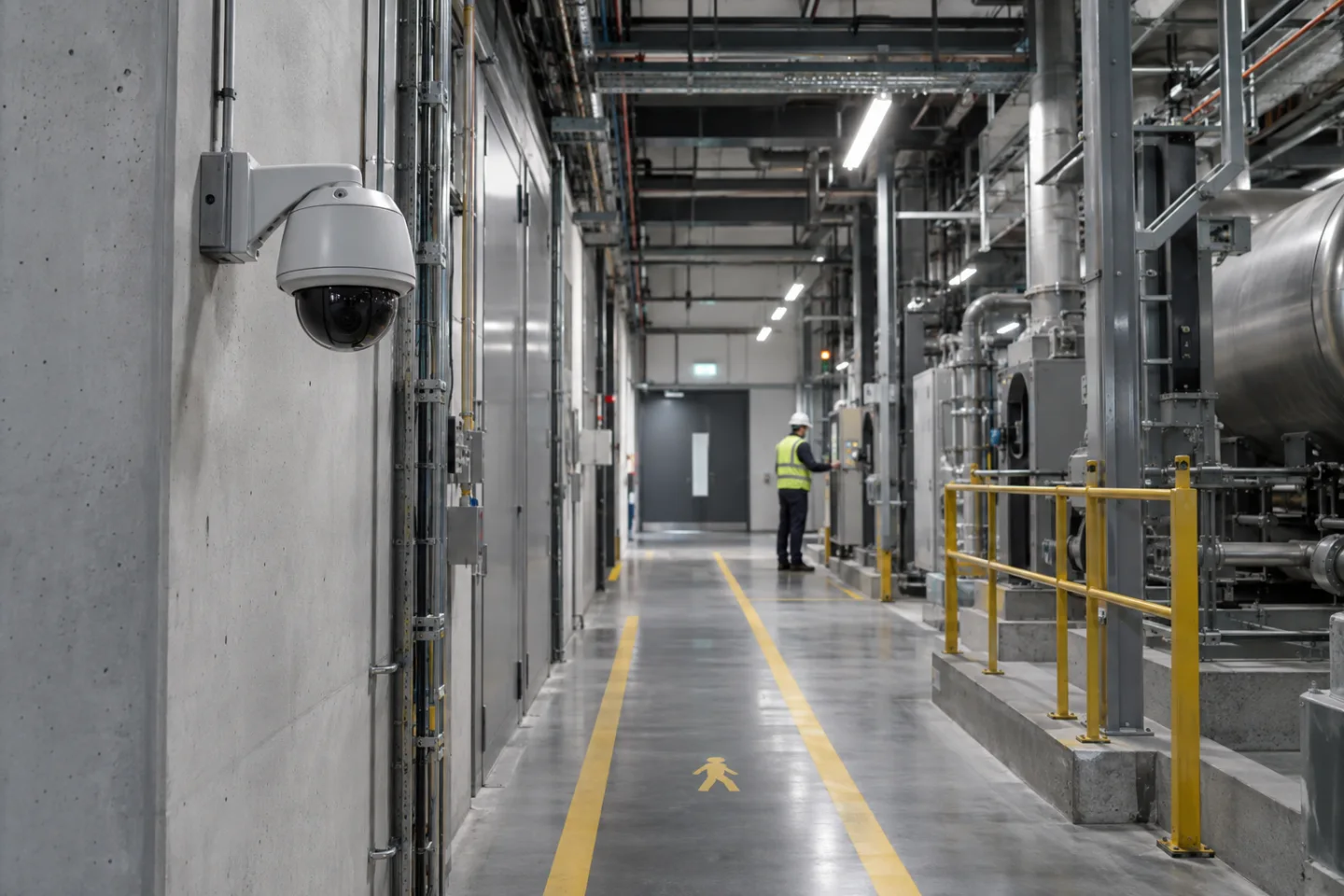
Where supported, an event can contain the location, time, rule or device reference and relevant image, clip or sensor information. A monitoring platform can route it to an operator queue, app, email or SMS service according to the agreed workflow.
An alarm output may provide a local indication or a supported integration, but its meaning and operating procedure must be defined.
The operator verifies the available information and follows the site's welfare or emergency response plan. The system should record acknowledgement and escalation, distinguish delivery failures from unanswered events and make a lost device or network connection visible. Sensitive images and welfare-related information need appropriate access controls and retention arrangements.
A broad distribution list is rarely a substitute for clearly assigned responsibility.
Commission safely and review changes
Testing should use approved simulations and the selected manufacturer's guidance. Do not ask someone to perform an unsafe fall or expose themselves to a hazard to demonstrate the system. Verify the monitored boundary, expected trigger, destination message and escalation route.
Include normal working postures and situations that may produce unwanted alerts so the operating team understands the limitations.
Review the arrangement when tasks, camera views, room layouts, staffing or communications change. Device maintenance and routine workflow checks matter as much as the initial demonstration. IS Security can coordinate suitable cameras or sensor interfaces, cabling, network connectivity and monitoring integration, with the required safety responsibilities and response ownership agreed before the installation is treated as operational.
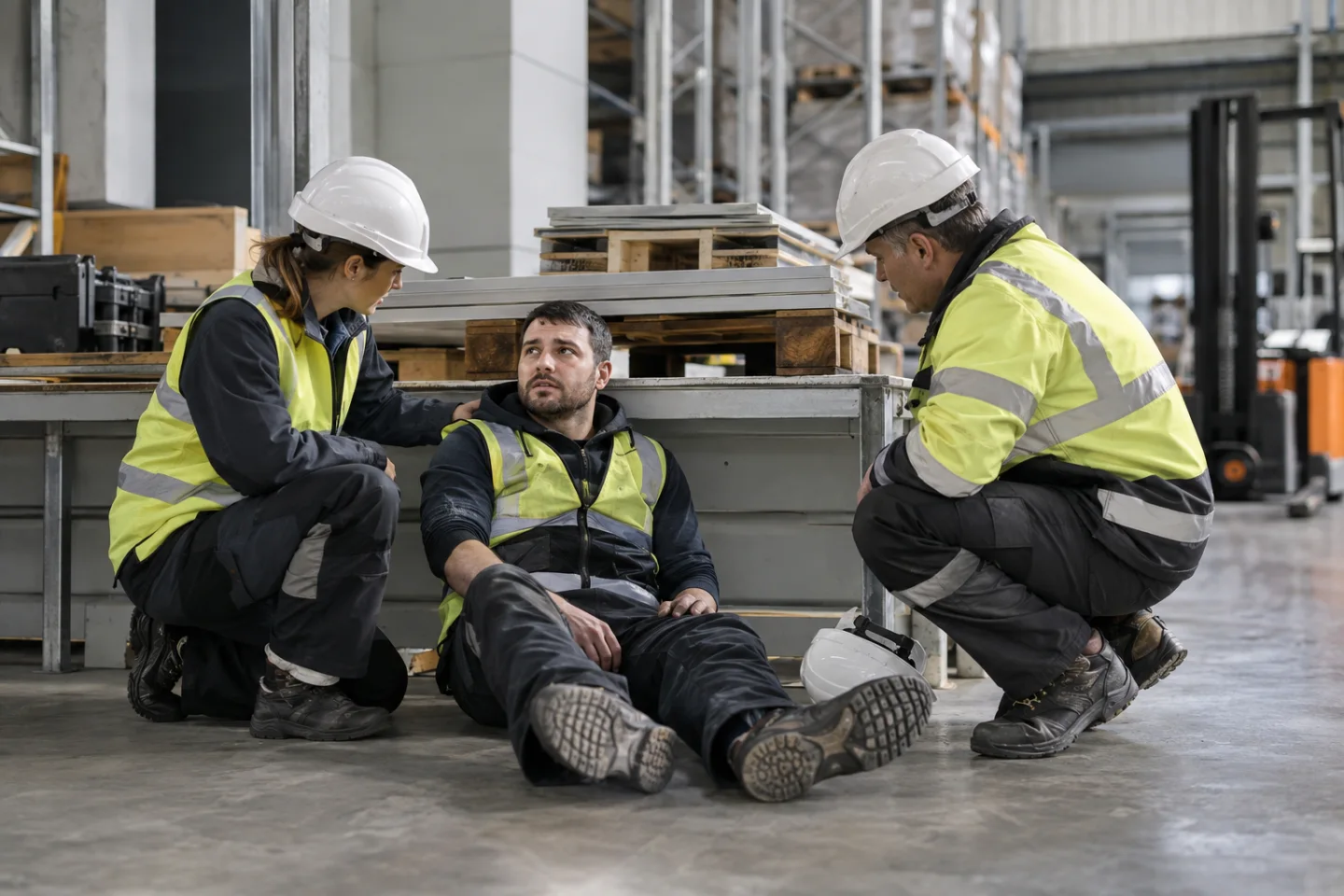
From a possible event to a useful response.
Possible event → duration check → human response. Open each stage to explore its role. This is an illustrative workflow; it does not analyse live footage or send notifications.
01 / OBSERVESupported camera / worker device
The monitored condition is: possible fall or prolonged immobility. Select the device, field of view and installation position for this specific task. Record obstructions, lighting, power and maintenance requirements before relying on the event stream.
02 / INTERPRETPosture / duration analytics
Apply configured delay and review procedure. The selected platform must support the intended event and expose a usable interface. Test representative events and unwanted triggers; an analytics output is a candidate for review, not proof of what happened.
03 / CONNECTLAN → firewall → secure platform
Carry authorised event data through the local switch or sensor gateway and an approved network path. Size bandwidth for any accompanying clip. Protect accounts and interfaces, supervise connection loss and agree retry behaviour where the platform supports it.
04 / RESPONDControl room / designated responder
Deliver the location, event type and time to the agreed recipient. A person verifies the available context, follows the site response procedure and records the outcome. Delivery, acknowledgement and resolution are different states and should be reviewed separately.
Where supported by the selected camera, sensor, VMS or analytics platform. Safety-related analytics provide supplementary operational awareness and do not replace dedicated certified fire or life-safety systems where required. The final design must define the equipment, event interfaces and responsible response team.
Reach the people who can act.
Available outputs depend on the selected platform, licences and agreed integrations. Open a channel for practical delivery considerations.
Send event context and a secure review link to an authorised mailbox where supported. Agree recipients and inbox monitoring; acceptance by a mail server does not confirm that a person has read or acted on the message.
Text / SMS
Use a supported gateway or monitoring integration for concise location and priority messages. Confirm service availability, costs and delivery reporting. Sensitive footage should stay within the authorised platform rather than an unrestricted text message.
Mobile apps
A supported application can present event details and acknowledgement controls to authorised users. Test notification permissions, connectivity and out-of-hours coverage. A silenced or offline handset needs a planned alternative recipient or escalation route.
Alarm outputs
A compatible interface may trigger an approved operational sounder, relay or indicator. Define supervision, reset behaviour and responsibility. Do not connect analytics directly to hazardous equipment or alter certified safety functions without the appropriate engineered design.
Control room / monitoring platform
Route supported events into the operator workflow with a consistent site identifier and priority. Give reviewers enough context to distinguish an actionable event from an unwanted trigger, with access restricted to their responsibilities.
Escalation & event review
Define who receives an unacknowledged event, how long the initial team has to respond and how closure is recorded. Review failed deliveries, recurring unwanted alerts and staffing gaps alongside the detection rules.
Plan the complete monitoring chain.
Start with the event, the operating environment and the person responsible for responding. Share existing equipment details, site plans and integration requirements with the technical team.