01
Fault investigation
Review reported symptoms and investigate physical cabling, terminations and connected equipment within the agreed scope.


Cable replacement, network fault finding and technology upgrades for large commercial vessels.
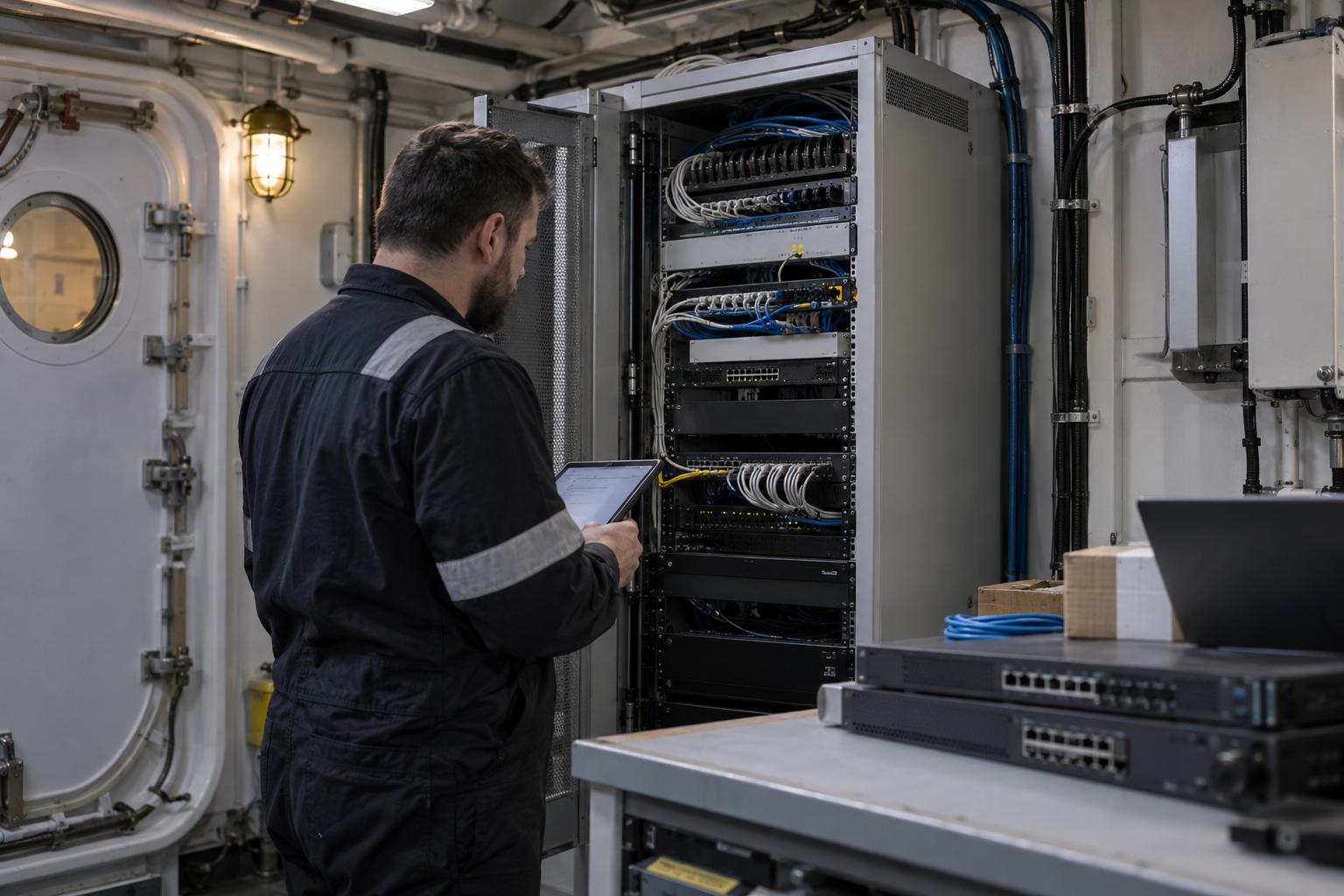
When onboard technology needs attention, good preparation makes the available access time more useful. IS Security scopes cabling repairs, network equipment replacement and CCTV upgrades around the reported issue, existing installation and the vessel’s location and access arrangements.
Physical infrastructure, connected equipment and a clearly agreed installation scope.
Review reported symptoms and investigate physical cabling, terminations and connected equipment within the agreed scope.
Replace damaged network runs, outlets and patching, with routes coordinated through existing vessel infrastructure.
Investigate fibre connections and scope termination or cable replacement work around the affected backbone link.
Replace or add switches, recording equipment and associated IT hardware as part of a planned change.
Trace camera connection issues and carry out agreed cable, device or recording equipment repairs.
Check the completed work, identify changed connections and hand over the agreed records to the vessel team.
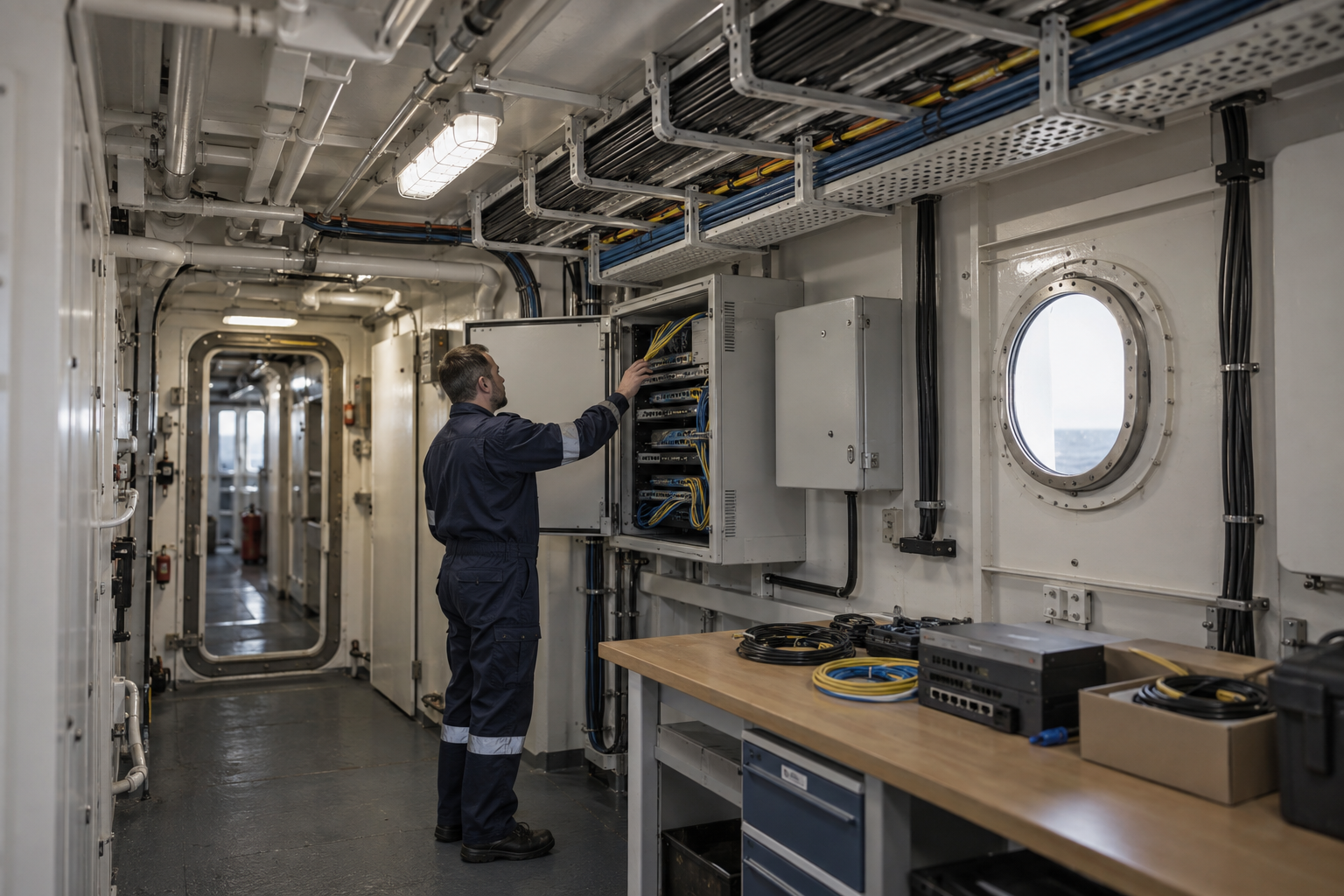
Vessel location, cable access, interfaces and attendance windows shape the agreed installation. The diagram illustrates system relationships, not a completed vessel project.
Investigate and repair vessel communications during planned attendance. Explore the decisions that shape the installation, interfaces and handover.
Describe the affected equipment, whether the fault is constant or intermittent and any recent changes aboard the vessel. Explain whether a whole area is affected or only one endpoint. Available drawings, equipment models and authorised photographs can help identify likely access and material needs. They cannot establish every fault remotely, so the scope may need an initial investigation stage. Keep the vessel location and attendance window current. A repair plan based on the wrong port timing can fail even when the technical diagnosis is otherwise sensible.
An immediate service problem and a wider upgrade may have different priorities. Agree what must be restored within the available window and which improvements can be planned after findings are known. Replacing a switch may require configuration ownership; replacing a cable may need route and material approval. Identify these dependencies before assuming that a spare component will solve the problem. Where temporary restoration is agreed, label and document the arrangement and define the follow-up work. Avoid leaving the next vessel team to infer which connections are temporary.
After an intervention, repeat the checks that relate to the reported problem and the agreed installation standard. Distinguish physical-link evidence from application or equipment tests. Record what changed, which services were restored and any limitations that remain. If the findings point beyond the approved scope, explain the next investigation required instead of presenting an incomplete repair as a full network renewal. For fleet operators, a consistent fault and handover record can support later planning while still preserving the specific condition and layout of each vessel.
Collect symptoms, equipment details and access constraints.
Agree immediate restoration, approved changes and deferred improvements.
Retest the reported issue and document temporary or unresolved conditions.
Use these checkpoints to discuss the scope. The final test method, responsibilities and acceptance evidence depend on the selected system and agreed work.
For maritime repairs, identify the affected equipment, onboard location and circumstances of failure. Explain whether the issue is constant, intermittent or linked to a recent change. Photographs of cabinet connections and existing identifiers help establish the investigation scope. Confirm whether one endpoint or several systems sharing a backbone are affected. This information supports a realistic attendance plan, appropriate materials and access to the relevant equipment spaces.
Replacing a failed connection differs from reorganising an entire vessel network. Identify what must be restored during the available window and which improvements can be planned separately. Arrange access to both ends of affected links with the vessel contact. Record retained surrounding infrastructure and conditions that could not be assessed. An urgent repair should not silently become an undefined refit with different materials, resources and acceptance requirements.
Provide a record of the fault investigated, completed work and agreed test outcome. List routes still requiring access and services left operational. Use consistent identifiers in photographs, cable records and outstanding actions. Base any later upgrade on investigation findings and operator requirements. Shore support and crew should be able to distinguish an accepted repair from temporary restoration or an unresolved dependency without reconstructing the visit from informal messages.
Where the investigation suggests a particular component may need replacement, confirm its interfaces and physical arrangement before mobilisation. An apparently similar connector or device may not match the installed system. Record any uncertainty and decide whether the first visit is diagnostic or intended to complete the repair. For a short vessel attendance, that distinction affects the materials carried and the work that can realistically be accepted. Keep removed component references with the repair record so a later fault can be compared with the original finding.
Explore installation requirements, interfaces and the information needed before work begins.
A connection problem may involve the satellite terminal, power, cable routing, router configuration or local switching. Describe which onboard areas and devices are affected so the investigation can follow the relevant path instead of assuming the fault is in one product.
For Starlink or IT equipment replacement, agree compatible hardware, existing configuration records and the checks needed before the installation is handed back. Attendance can be coordinated through European technical resources and mobile fly teams, with the port window, equipment logistics and responsibilities confirmed in advance.
Describe the fault, affected equipment, any recent changes and available drawings or photographs. Include the vessel location and the dates when access may be possible.
Attendance and work windows are agreed after reviewing the vessel location, access arrangements and required scope. Contact us to discuss availability.
Yes. Where an existing installation needs replacement, we can scope an upgrade alongside the immediate repair and identify the additional work involved.
Commercial sites. International programmes. Onboard systems.
Installations across all of the US, Europe, the Caribbean, the UK and South Africa, with deployment support in Canada and Panama.
Regional resources · Fly teams · International project support
Explore regions & deployment hubs →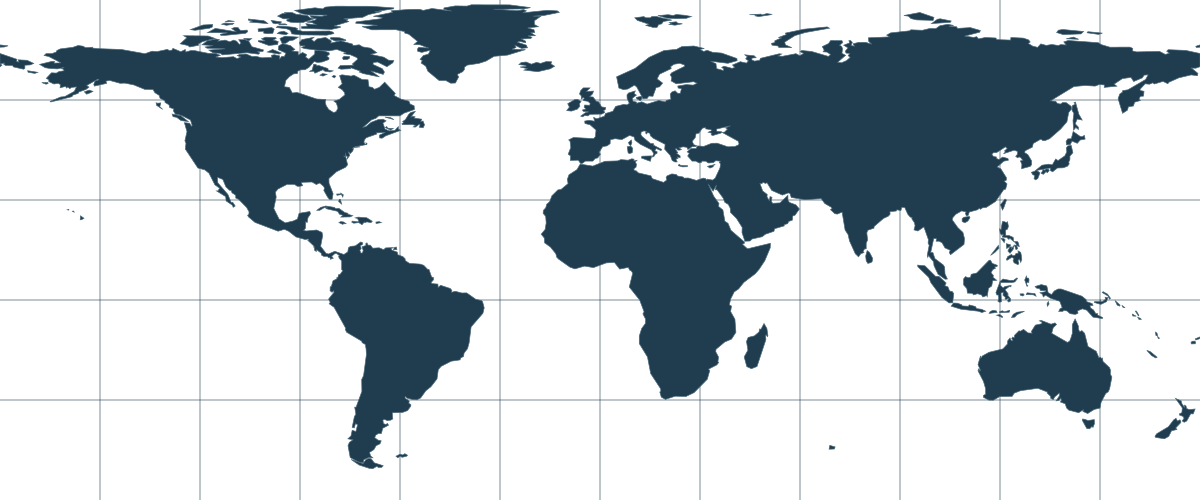 DEPLOYMENT NETWORK / ILLUSTRATIVE CONNECTIONS