


IT INFRASTRUCTURE / COMMERCIAL SITES / GLOBAL DEPLOYMENTS
929‑502‑3991   /   Speak to our team
Louisville, Kentucky: location context for commercial infrastructure planning
Louisville, Kentucky · editorial location photograph, not an IS Security project or office · Charles Delano of LouisvilleUSACE - Louisville District of the US Army Corp of Engineers · Source · CC BY 2.0. Responsive WebP derivative.
COMMERCIAL INFRASTRUCTURE / KENTUCKY, USA

Commercial networks & connected security in Kentucky

Kentucky’s logistics and manufacturing premises need working dispatch and facility evidence, alongside office cabling around its regional centres. Louisville distribution differs from Lexington business spaces and southern production-support buildings. IS Security can assess copper, fibre, wireless and security with local work windows retained.

Discuss your project
Networks & Wi-FiPrivate fibreStructured cabling
Generated service illustration: Commercial CCTV installation for Kentucky project planning
Generated service illustration; not a completed local project or office photograph.
LOCAL CONTEXT / REAL PROJECT DECISIONS

Air-linked dispatch and northern Kentucky premises

Louisville warehouse acceptance should include working aisles and loading views. Bowling Green production-support cutovers need an operator-approved window, while Lexington offices prioritise desks and visitor access. Northern Kentucky sites are assessed on their own addresses rather than assumed to share another state’s building permissions.

A Louisville distribution property should supply stocked-rack and receiving information, while Lexington business offices may need dense endpoints and controlled migration. Bowling Green manufacturing premises require retained production-support boundaries before shared cabinet work. Kentucky customers should ask whether the proposed pilot reflects their dominant operational dependency. The handover can standardise labels and evidence without prescribing the same wireless layout, camera events or outage across every regional commercial address.

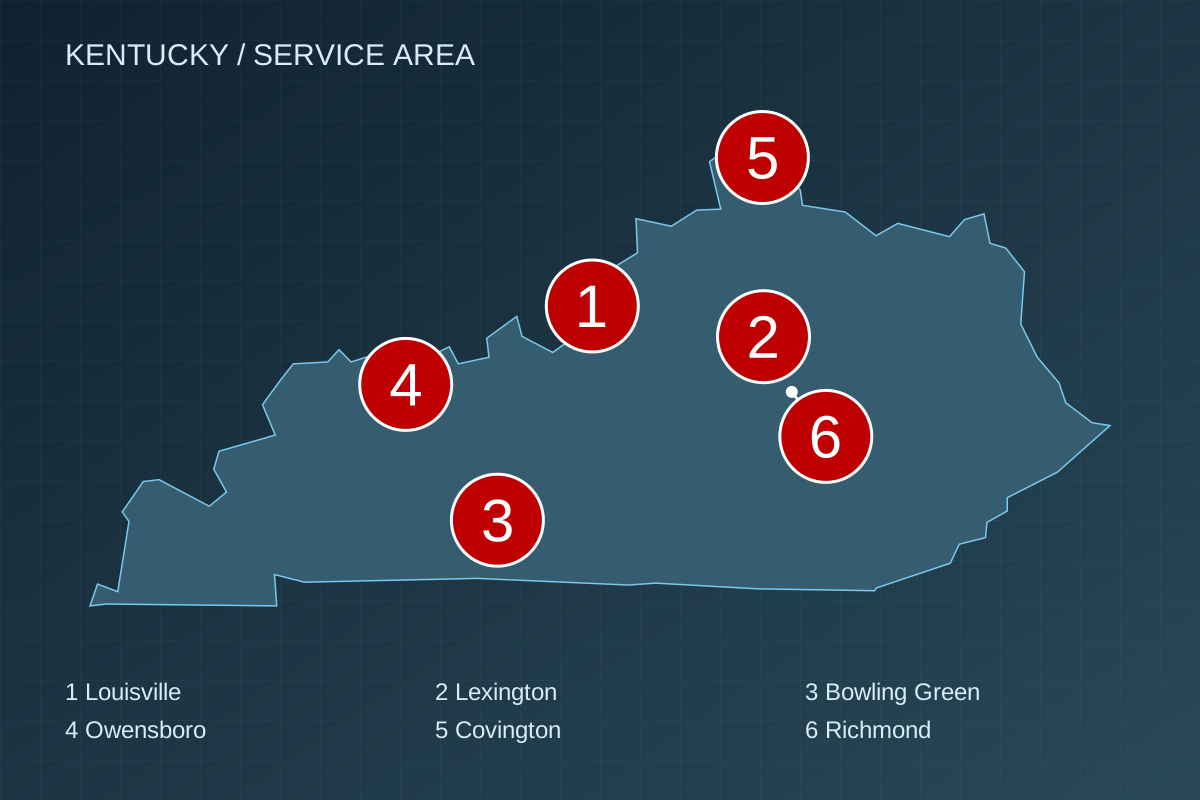
Key commercial and service areas in Kentucky, USA

Kentucky map with numbered service-area markers
Kentucky map with numbered service-area markers Planning geography, not office locations or confirmed project sites. Numbers match the service-area list. Open full-size Kentucky map.

Match the service-area briefs to the actual premises. The map is a planning aid; installation routes, access and feasible attendance are confirmed for each address.

Networks & Wi-FiPrivate fibreStructured cabling
  1. Louisville: warehouses and distribution

    Louisville combines air-linked distribution, manufacturing and business offices. Scanner roaming and goods movement should inform warehouse networks and loading CCTV.

  2. Lexington: occupied offices

    Lexington adds regional corporate and business-service premises. Tenant cabling and meeting-room networks require staged office migration.

  3. Bowling Green: manufacturing and industrial support

    Bowling Green brings automotive-region and manufacturing-support buildings. Protect retained production links when renewing private backbones or contractor access.

  4. Owensboro: manufacturing and industrial support

    Owensboro adds river-region industrial commerce. Facility routes and equipment-room responsibilities should be established before fibre or CCTV changes.

  5. Covington: occupied offices

    Covington and northern Kentucky support business and distribution linked to the wider Cincinnati market. Specify Kentucky premises and their own local contacts.

  6. Richmond: retail and commercial branches

    Richmond extends coverage to regional commercial buildings. Branch networks should retain trading hours and maintainable rack records.

CABLING / FIBRE / EQUIPMENT CAPACITY

From the backbone to the devices that use it

Keep private fibre routes, copper channels, switching capacity and endpoint ownership visible in the design. The schematic separates physical installation from the device and operational tests needed at handover.

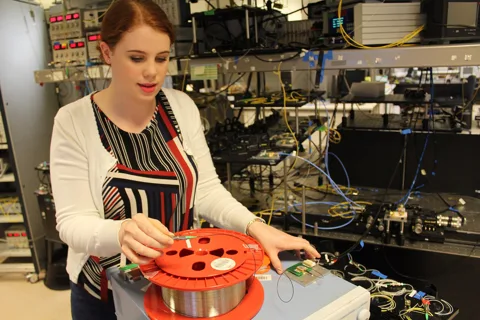
Illustrative equipment reference: "optical fibre" for Kentucky project planning
Illustrative service reference; not a local project. NiamhTalking90 · Photograph · CC BY-SA 4.0
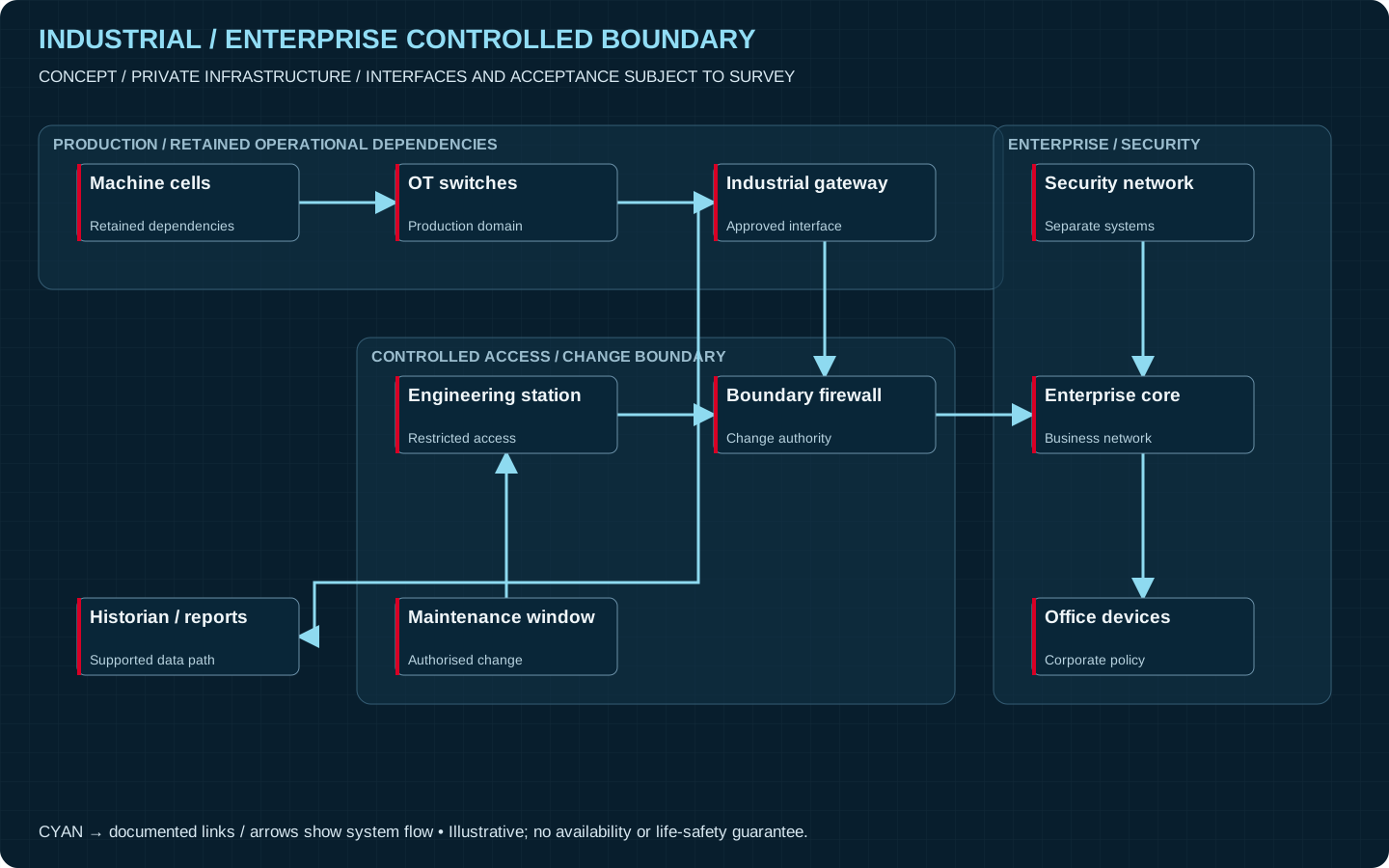
Industrial / enterprise controlled boundary: Do not bridge production and enterprise domains without authorised boundary design.
Do not bridge production and enterprise domains without authorised boundary design. Illustrative design, subject to survey. Enlarge schematic · Swipe to inspect; tap to enlarge.
LOCAL SERVICE DESIGN / ENGINEERING DETAIL

Built around the systems your site needs

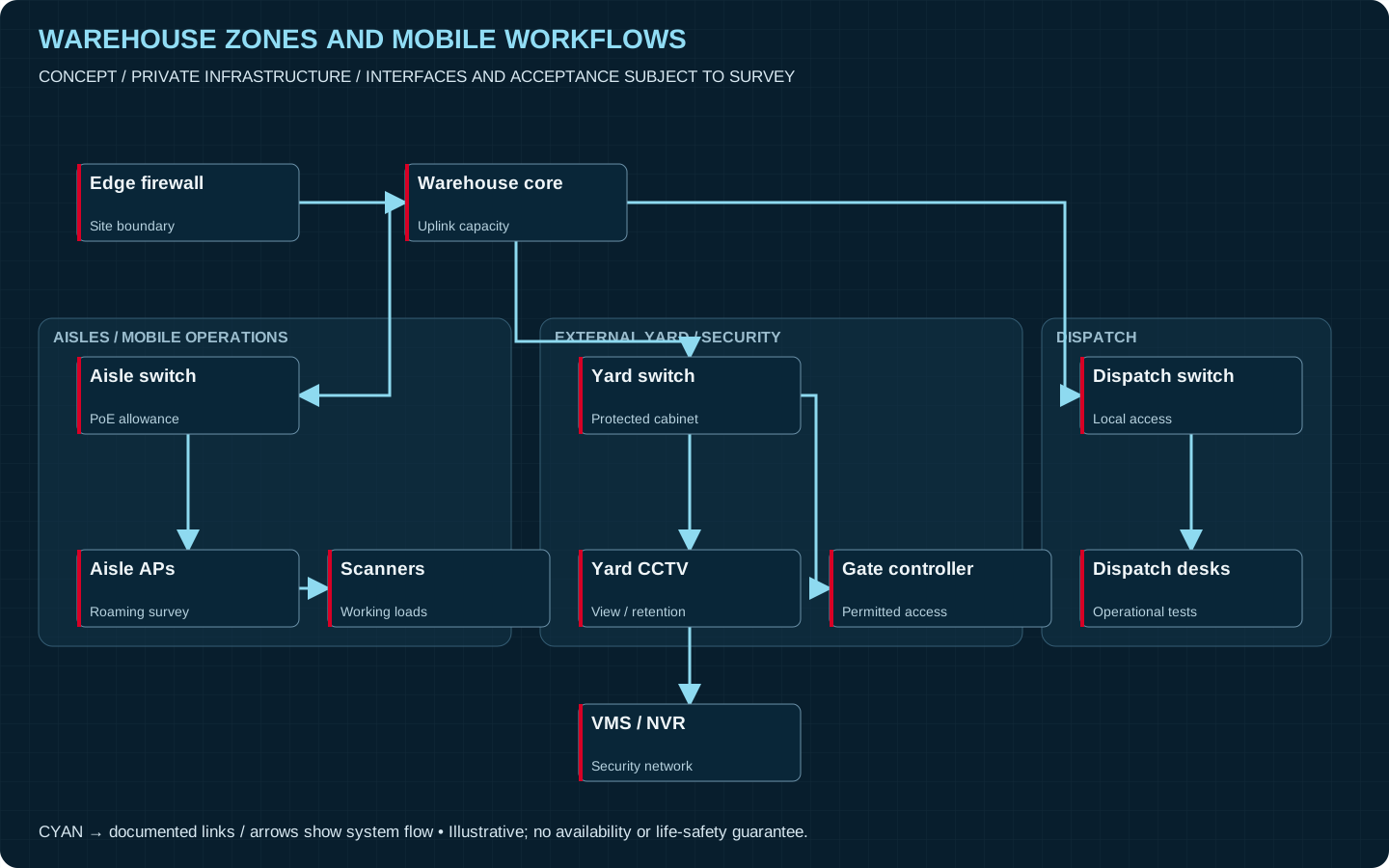
Warehouse zones and mobile workflows: Aisle roaming, yard security and dispatch access have different acceptance tests.
Aisle roaming, yard security and dispatch access have different acceptance tests. Illustrative design, subject to survey. Enlarge schematic · Swipe to inspect; tap to enlarge.

Network infrastructure and Wi-Fi — Louisville

Design & installation detail

Scanner roaming and goods movement should inform warehouse networks and loading CCTV. For the Louisville setting described above, stocked-aisle roaming is a useful starting point for network infrastructure and wi-fi. Survey stocked racks, scanner journeys and receiving activity. Loading views and wireless roaming should be accepted against representative goods movement. Plan switches, uplinks, PoE budgets and wireless coverage around the devices and workflow. Segregate business, guest and security traffic appropriately. A visible access point or link light does not establish usable coverage: agree representative roaming, throughput and device-power tests, with retained configuration ownership recorded before migration.
Explore network infrastructure and wi-fi
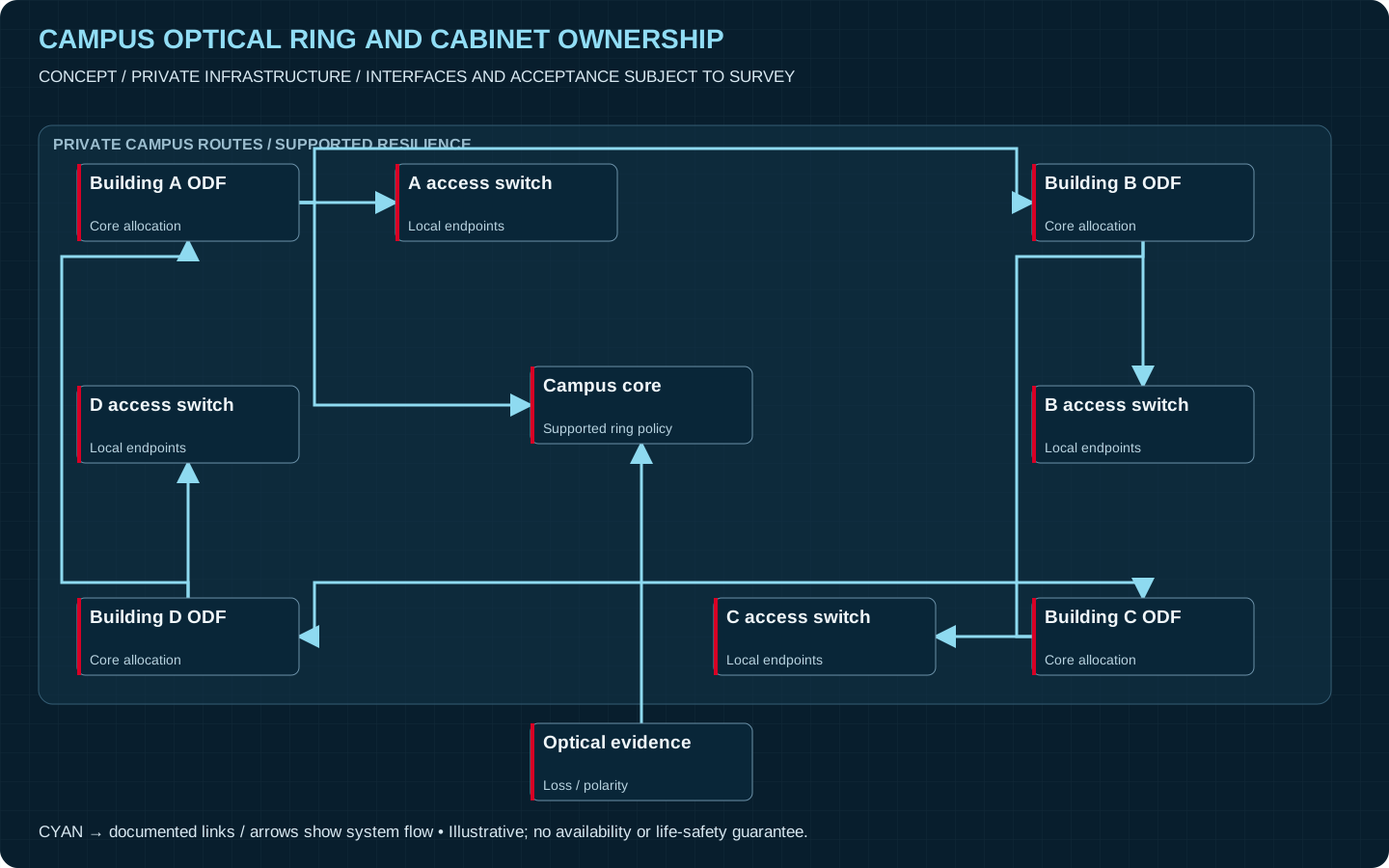
Campus optical ring and cabinet ownership: A physical ring needs compatible switching policy, measured paths and core records.
A physical ring needs compatible switching policy, measured paths and core records. Illustrative design, subject to survey. Enlarge schematic · Swipe to inspect; tap to enlarge.

Private fibre infrastructure — Lexington

Design & installation detail

Tenant cabling and meeting-room networks require staged office migration. For the Lexington setting described above, floor-to-floor cabinet links are a useful starting point for private fibre infrastructure. Tenant routes, shared risers and desk or meeting-room changes need building approval. Plan cutovers around the business services that must remain available. Define the buildings and cabinets served, existing ducts and termination ownership before selecting the backbone. Fibre installation can include termination, splicing and testing where scoped. Record core allocation, polarity and agreed loss measurements so future support can distinguish an optical-link fault from a switch or carrier problem.

Explore private fibre infrastructure

Structured cabling — Bowling Green

Protect retained production links when renewing private backbones or contractor access.

Design & installation detail

Protect retained production links when renewing private backbones or contractor access. For the Bowling Green setting described above, administrative and production-support boundaries are a useful starting point for structured cabling. Administrative cabling must preserve customer-defined production boundaries. Confirm operating permissions and outage consequences before moving shared cabinet equipment. Cat6 and Cat6A options should be selected against the intended channel, equipment and installation conditions, with Cat5e repairs assessed against the retained system. Agree outlet quantities, containment and patch-panel capacity before procurement. Label both ends and certify the scoped links; an installed cable category alone is not an acceptance result.

Explore structured cabling

Commercial CCTV installation — Owensboro

Facility routes and equipment-room responsibilities should be established before fibre or CCTV changes.

Design & installation detail

Facility routes and equipment-room responsibilities should be established before fibre or CCTV changes. For the Owensboro setting described above, yard views and operational access are a useful starting point for commercial cctv installation. Administrative cabling must preserve customer-defined production boundaries. Confirm operating permissions and outage consequences before moving shared cabinet equipment. Choose camera views from the incident or operational question, then assess lighting, mounting access and recording needs. Agree retention and authorised viewing with the customer. Commission useful sample views at the entrances, goods areas or boundaries in scope, rather than accepting a system solely because every camera appears online.

Explore commercial cctv installation

AI CCTV and intelligent video — Covington

Specify Kentucky premises and their own local contacts.

Design & installation detail

Specify Kentucky premises and their own local contacts. For the Covington setting described above, agreed entrance events is a useful starting point for ai cctv and intelligent video. Tenant routes, shared risers and desk or meeting-room changes need building approval. Plan cutovers around the business services that must remain available. Select supported analytics for a defined operator task: intrusion, people counting, PPE or man-down events require different views and trials. Smoke, fire or heat indications and leak-detection integrations are supplementary monitoring where supported. They do not replace certified fire or life-safety systems. Agree representative event tests, recipients and review responsibility before enabling alerts.

Explore ai cctv and intelligent video

Access control and security integration — Richmond

Branch networks should retain trading hours and maintainable rack records.

Design & installation detail

Branch networks should retain trading hours and maintainable rack records. For the Richmond setting described above, stock rooms and branch credentials are a useful starting point for access control and security integration. Separate trading areas, stock rooms and customer connectivity. Landlord routes and opening hours can change the installation sequence at each branch. Identify staff, visitor and goods-door workflows before choosing access equipment. Confirm supported interfaces with alarms and CCTV, authorised credential administration and the handling of faults. Egress and life-safety requirements need the appropriate specialist approval; a security integration must not silently alter a retained safety function.

Explore access control and security integration

Related systems, upgrades and maintenance

Regional handover should name the customer’s IT and facility owners for later maintenance. IT infrastructure and equipment rooms can be included where the surveyed property and supported interfaces justify it. Remote connectivity and secure administration can be included where the surveyed property and supported interfaces justify it. Repairs and upgrades should identify retained cable and equipment condition before replacement is proposed. Maintenance scope, access periods and spare-equipment responsibility are agreed separately. Cybersecurity review should define firewall rules, network separation and authorised remote administration for the actual estate.

Firewall and cybersecurity planning

Project delivery across Kentucky, USA

Fibre termination

Optical terminations require protected handling, labelling and acceptance tests.

Illustrative service sequence; not a completed local project.

Read the video description

Fibre termination. Optical terminations require protected handling, labelling and acceptance tests.

People counting

Use agreed camera views and counting rules to interpret footfall.

Illustrative service sequence; not a completed local project.

Read the video description

People counting. Use agreed camera views and counting rules to interpret footfall.

PROPERTY READINESS / ACCEPTANCE EVIDENCE

A controlled change, with an accountable handover

Group distribution and factory visits around operational readiness. Keep copper tests, fibre cores and scanner evidence separate.

PHYSICAL LINKS / LOGICAL BOUNDARIES / OPERATOR RESPONSE

A connected system. Clear ownership.

Follow the path from external connectivity to the private backbone, connected devices and authorised operators. Network separation, tested links and an agreed alert route form one maintainable design.

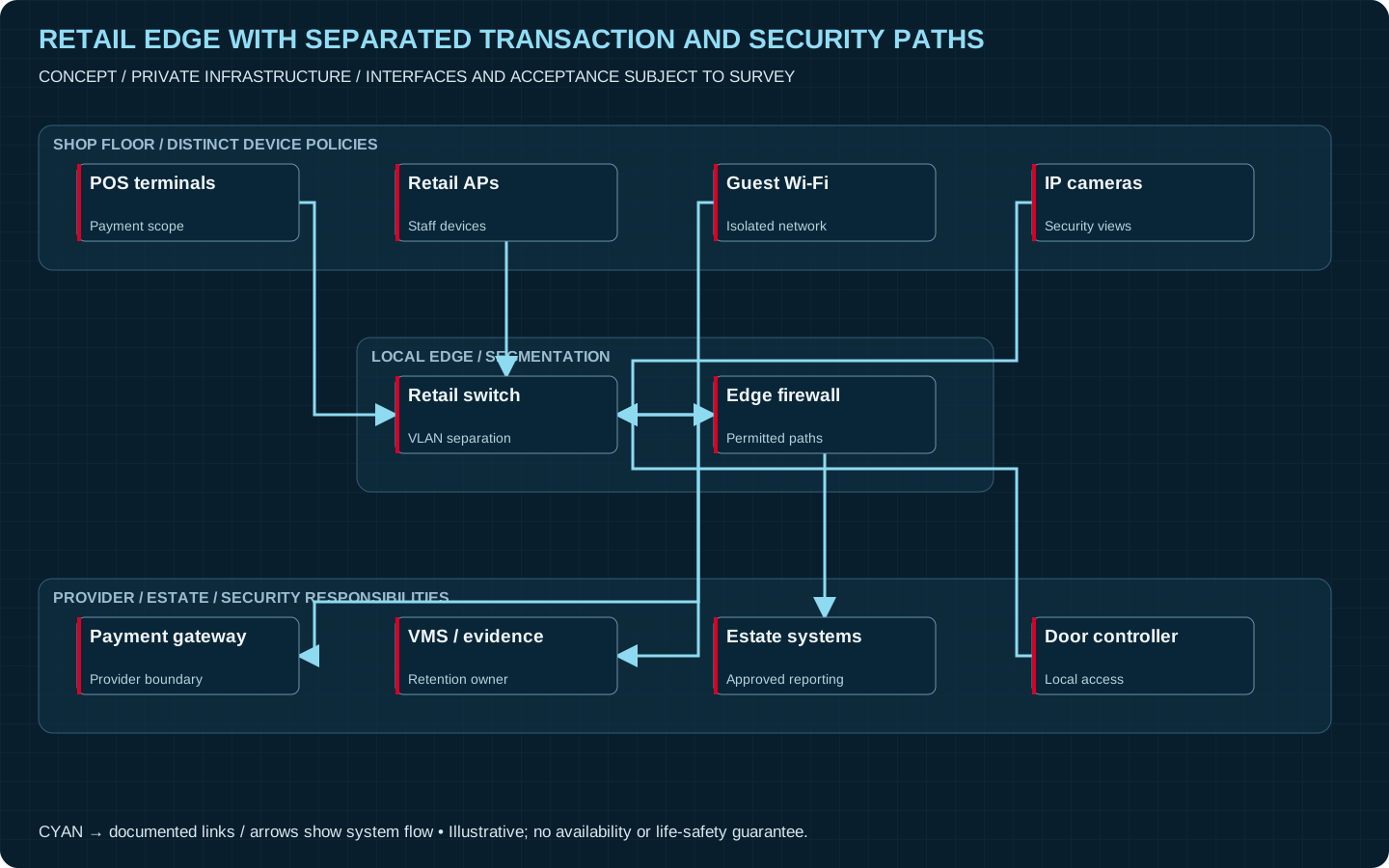
Retail edge with separated transaction and security paths: Payment, guest, staff and security systems require separate scope and policy.
Payment, guest, staff and security systems require separate scope and policy. Illustrative design, subject to survey. Enlarge schematic · Swipe to inspect; tap to enlarge.

Questions shaped by Kentucky, USA projects

What should a Louisville warehouse enquiry include?

Louisville combines air-linked distribution, manufacturing and business offices. Scanner roaming and goods movement should inform warehouse networks and loading CCTV. Send the exact address, drawings or route photographs, retained equipment details and the permitted work period. These establish the survey boundary and installation prerequisites; a city coverage statement alone does not confirm attendance.

How should network infrastructure and wi-fi be scoped for Lexington?

Lexington adds regional corporate and business-service premises. Tenant cabling and meeting-room networks require staged office migration. Define the private links and devices included, the authorised site contacts and the acceptance evidence. Repairs, upgrades and a new installation can have different retained-system dependencies, so identify what must stay operational.

Why does “Air-linked dispatch and northern Kentucky premises” matter to this project?

Louisville warehouse acceptance should include working aisles and loading views. Bowling Green production-support cutovers need an operator-approved window, while Lexington offices prioritise desks and visitor access. Northern Kentucky sites are assessed on their own addresses rather than assumed to share another state’s building permissions. The proposal should turn these conditions into explicit survey, equipment and commissioning requirements rather than assume all premises share one design.

Can a programme combine Louisville with Richmond?

Group distribution and factory visits around operational readiness. Keep copper tests, fibre cores and scanner evidence separate. Regional handover should name the customer’s IT and facility owners for later maintenance. Confirm the address list and permitted work at each property. Project deployment does not imply permanently based technicians, immediate attendance or an automatic ongoing maintenance contract.

What acceptance evidence is useful for private fibre infrastructure in Kentucky, USA?

Agree the test boundary before work starts. Fibre handover should identify cores, terminations and agreed loss tests. Keep private-backbone acceptance separate from carrier availability and retained switch configuration. Richmond extends coverage to regional commercial buildings. Branch networks should retain trading hours and maintainable rack records.

Which security or connectivity additions suit Richmond retail branch?

Richmond extends coverage to regional commercial buildings. Branch networks should retain trading hours and maintainable rack records. Separate trading areas, stock rooms and customer connectivity. Landlord routes and opening hours can change the installation sequence at each branch. CCTV, supported analytics, access control or backup connectivity can be assessed against that workflow. Confirm interfaces, power and authorised administration. Video fire or heat indications are supplementary and do not replace certified life-safety systems.

Plan your Kentucky, USA installation

Send the site addresses, existing infrastructure, required services and permitted work windows. IS Security can review the scope, survey prerequisites, deployment feasibility and handover requirements for your project.

Discuss your Kentucky project