

IT INFRASTRUCTURE / COMMERCIAL SITES / GLOBAL DEPLOYMENTS
929‑502‑3991   /   Speak to our team
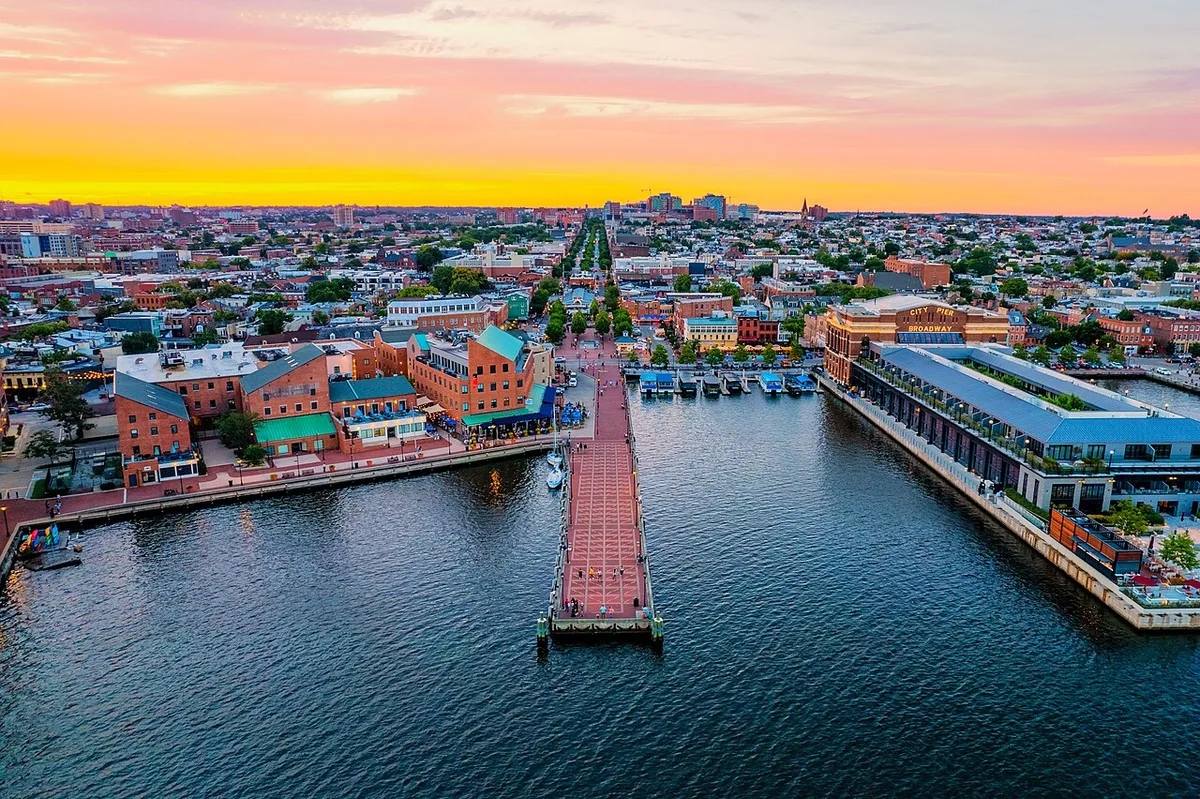
Baltimore, Maryland: location context for commercial infrastructure planning
Baltimore, Maryland · editorial location photograph, not an IS Security project or office · Matthew Binebrink · Source · CC BY-SA 4.0. Responsive WebP derivative.
COMMERCIAL INFRASTRUCTURE / MARYLAND, USA

IT infrastructure & structured cabling in Maryland

Maryland combines Baltimore freight and commercial premises with the Capital Region’s life-science and technology business corridor, plus regional offices and coastal commerce. Facility access and specialist interfaces deserve careful scoping. IS Security can review ordinary IT infrastructure, copper, fibre and connected security.

Discuss your project
IT infrastructurePrivate fibreStructured cabling
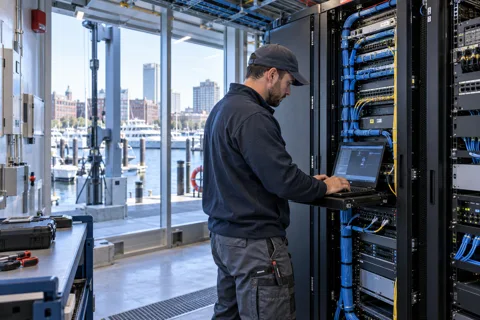
Generated service illustration: IT infrastructure and equipment rooms for Maryland project planning
Generated service illustration; not a completed local project or office photograph.
LOCAL CONTEXT / REAL PROJECT DECISIONS

Life-science business boundaries and freight workflows

Rockville and Gaithersburg commercial IT can require dense copper and controlled administration without ownership of laboratory or process systems. Baltimore warehouses need scanner and loading tests. Shore-side routes add exposure and access concerns only where applicable. Keep security notifications separate from certified life-safety responsibilities.

A Baltimore freight-related property and a Bethesda or Rockville technology-business office have different camera, fibre and configuration requirements. Frederick regional commercial sites should expose their own retained links and equipment ownership. Maryland customers should define ordinary business IT separately from any specialist facility network. For multi-site procurement, ask which backbone and security interfaces can be repeated, then preserve goods-flow acceptance and controlled-area permissions at the properties where they actually apply.

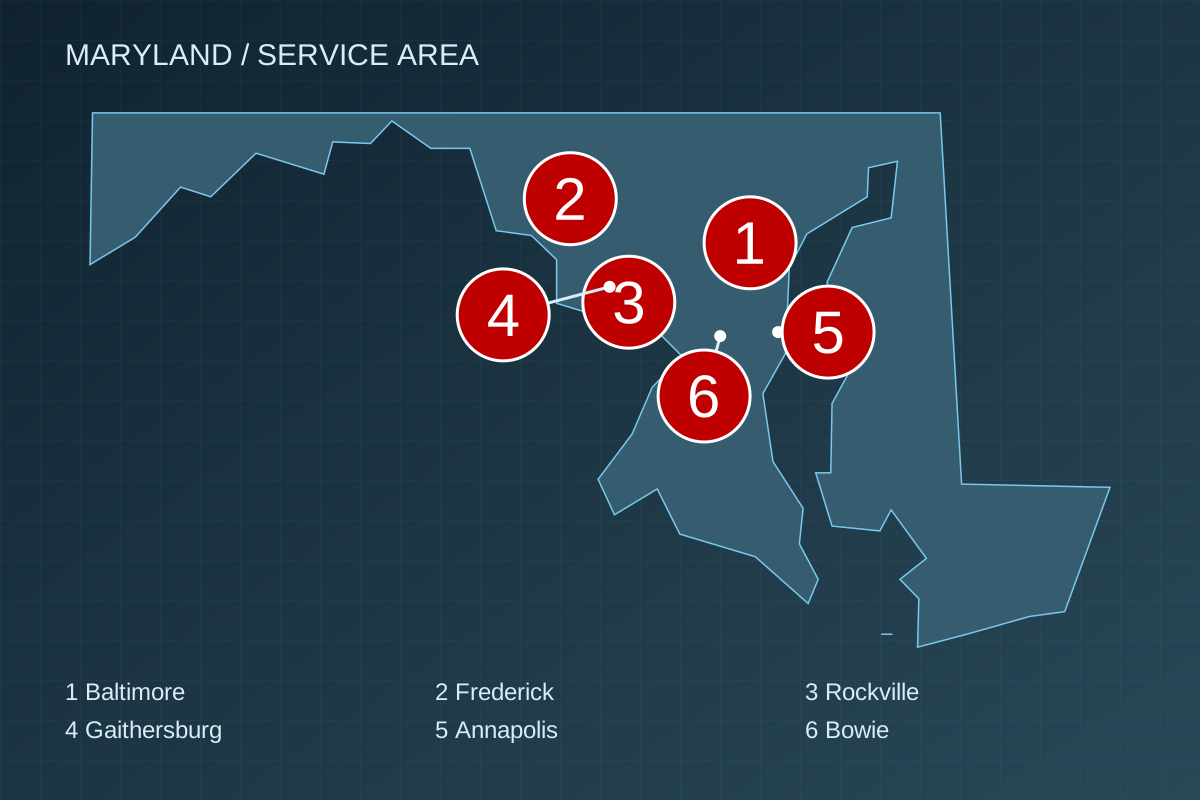
Key commercial and service areas in Maryland, USA

Maryland map with numbered service-area markers
Maryland map with numbered service-area markers Planning geography, not office locations or confirmed project sites. Numbers match the service-area list. Open full-size Maryland map.

Match the service-area briefs to the actual premises. The map is a planning aid; installation routes, access and feasible attendance are confirmed for each address.

IT infrastructurePrivate fibreStructured cabling
  1. Baltimore: port-related and shore-side commerce

    Baltimore combines offices, industrial-commerce and port-linked logistics. Goods-yard CCTV and tenant networks need different operator and landlord permissions.

  2. Frederick: technology and campus premises

    Frederick’s life-science and technology-business context needs controlled work areas. Commercial networks should preserve separately owned specialist facility systems.

  3. Rockville: technology and campus premises

    Rockville adds biotechnology and business premises. Dense endpoints and access-controlled equipment rooms need explicit IT ownership at handover.

  4. Gaithersburg: technology and campus premises

    Gaithersburg extends the life-science-business corridor. Private fibre and rack upgrades should retain authorised boundaries with development and process equipment.

  5. Annapolis: occupied offices

    Annapolis supports business and administrative premises with maritime surroundings. Ordinary office cabling should not imply a public-institution or vessel contract.

  6. Bowie: occupied offices

    Bowie adds regional commercial offices and property. Guest wireless and branch access should follow the building’s own customer permissions.

CABLING / FIBRE / EQUIPMENT CAPACITY

From the backbone to the devices that use it

Keep private fibre routes, copper channels, switching capacity and endpoint ownership visible in the design. The schematic separates physical installation from the device and operational tests needed at handover.

Illustrative equipment reference: "fibre optic" for Maryland project planning
Illustrative service reference; not a local project. Iletoundra · Photograph · CC BY-SA 4.0
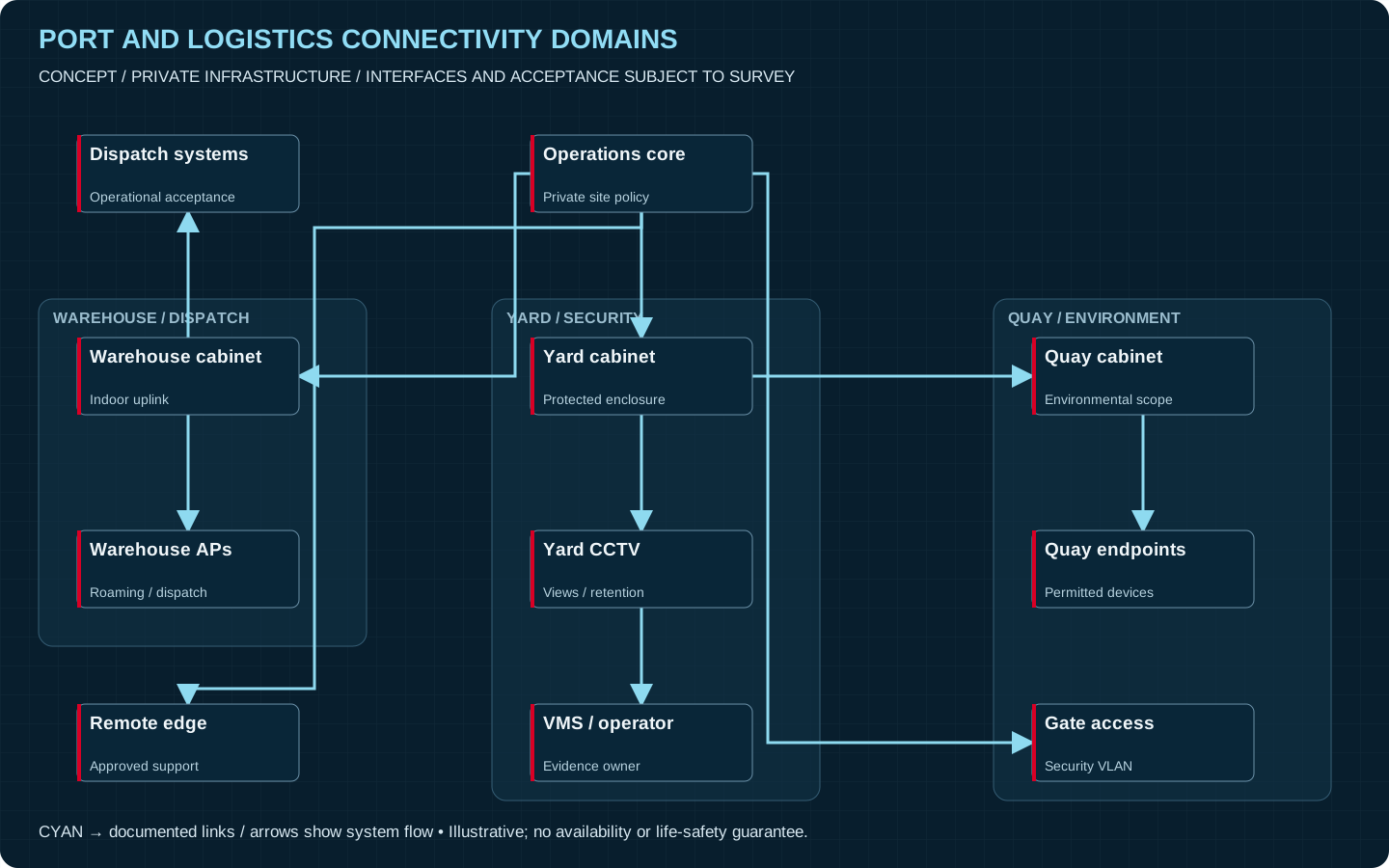
Port and logistics connectivity domains: Indoor, yard and quay links need distinct enclosure, route and operational tests.
Indoor, yard and quay links need distinct enclosure, route and operational tests. Illustrative design, subject to survey. Enlarge schematic · Swipe to inspect; tap to enlarge.
LOCAL SERVICE DESIGN / ENGINEERING DETAIL

Built around the systems your site needs

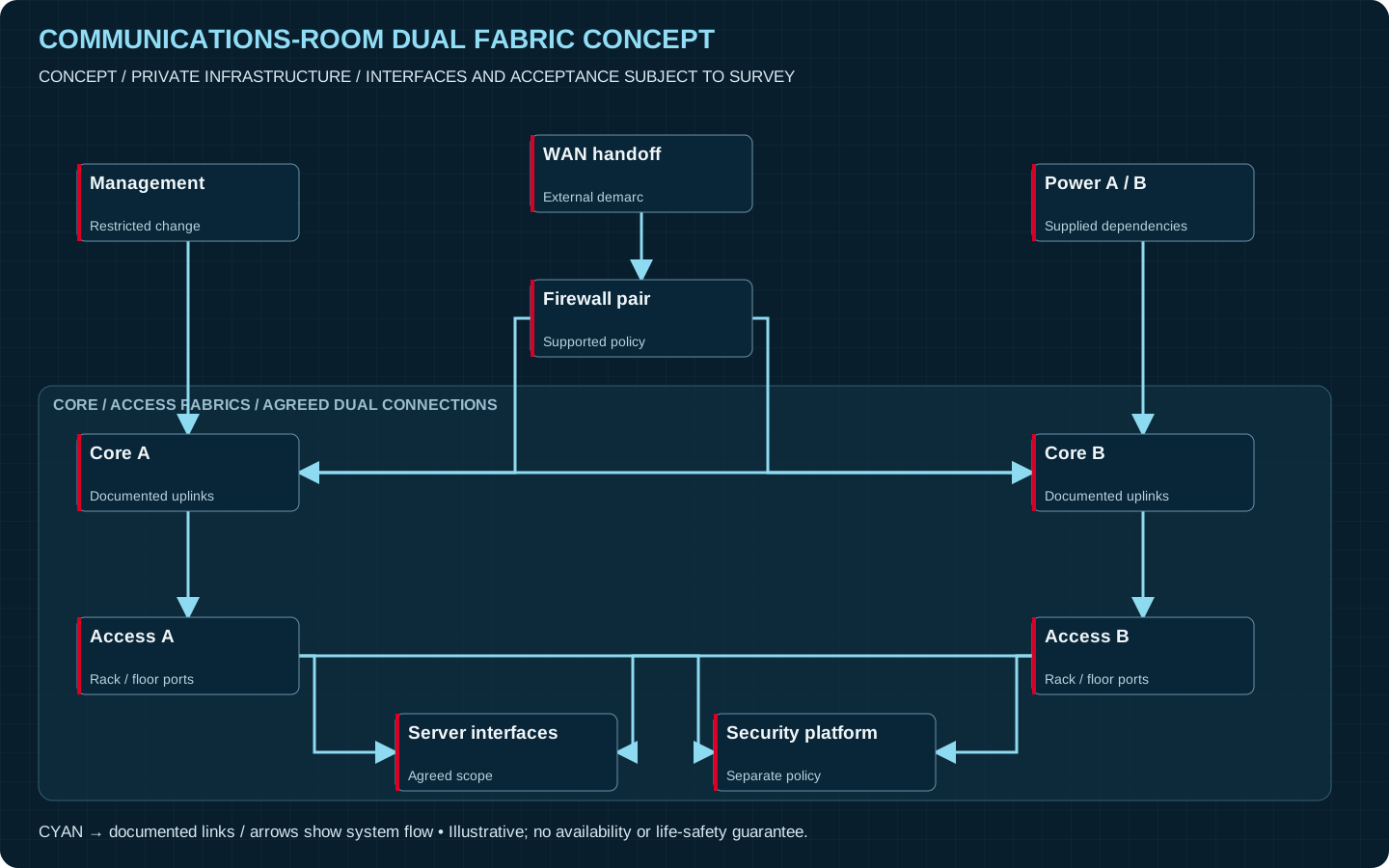
Communications-room dual fabric concept: Dual paths require supported equipment, configuration and separately documented power scope.
Dual paths require supported equipment, configuration and separately documented power scope. Illustrative design, subject to survey. Enlarge schematic · Swipe to inspect; tap to enlarge.

IT infrastructure and equipment rooms — Baltimore

Design & installation detail

Goods-yard CCTV and tenant networks need different operator and landlord permissions. For the Baltimore setting described above, operator network boundaries is a useful starting point for it infrastructure and equipment rooms. State the authorised private-property boundary and operator permissions. Exposed routes and mounting need survey evidence; location near a port does not confer operational access. Racks and cabinets need accessible patching, suitable power arrangements and space for the agreed growth plan. Document addressing, network segments and configuration ownership. Identify retained systems before replacing switches or moving endpoints; physical installation and business-service migration should have separate readiness and acceptance decisions.
Explore it infrastructure and equipment rooms
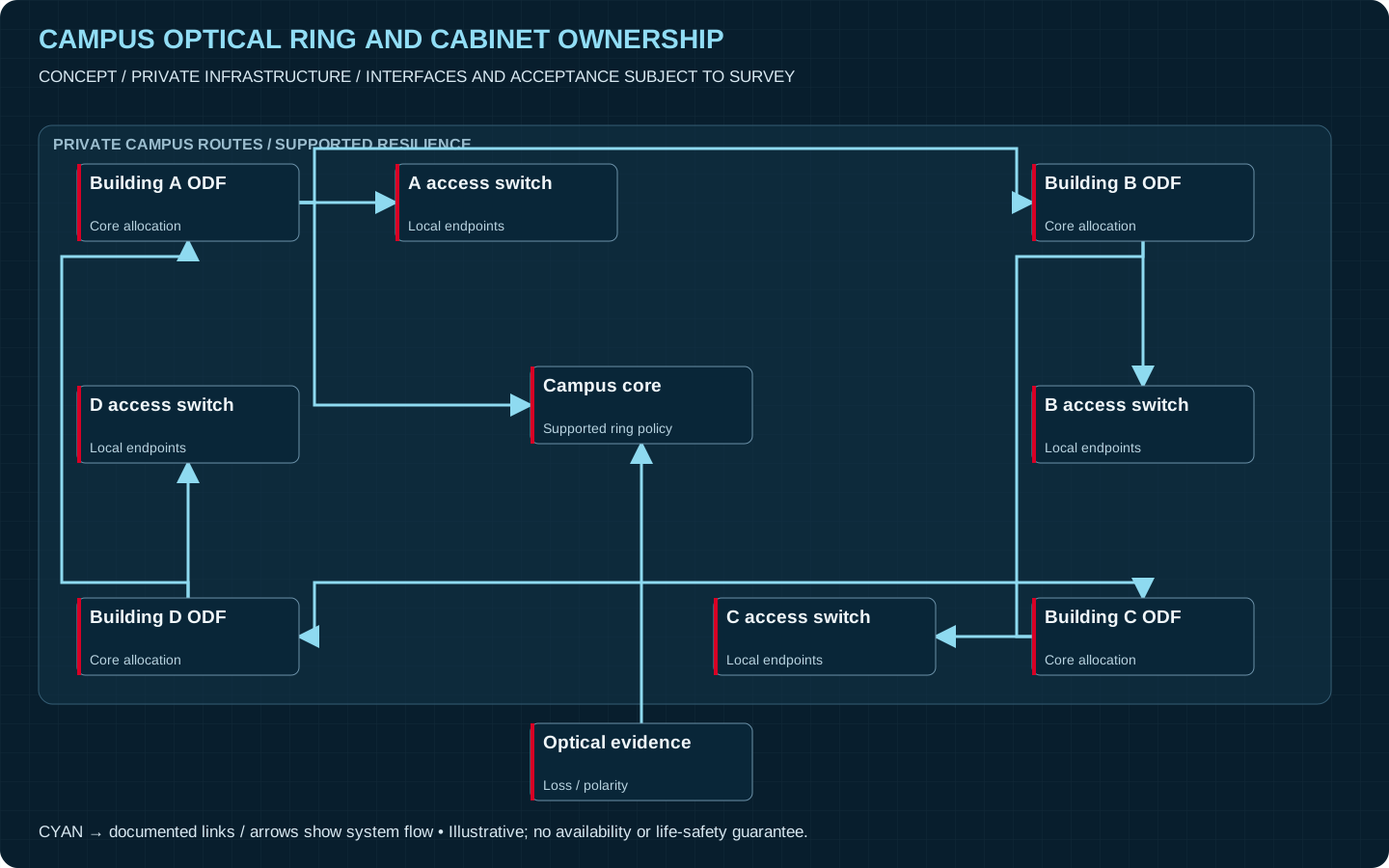
Campus optical ring and cabinet ownership: A physical ring needs compatible switching policy, measured paths and core records.
A physical ring needs compatible switching policy, measured paths and core records. Illustrative design, subject to survey. Enlarge schematic · Swipe to inspect; tap to enlarge.

Private fibre infrastructure — Frederick

Design & installation detail

Commercial networks should preserve separately owned specialist facility systems. For the Frederick setting described above, campus core allocation is a useful starting point for private fibre infrastructure. Define the boundary between commercial IT and specialist development or facility systems. Campus equipment rooms need named ownership and documented backbone capacity. Define the buildings and cabinets served, existing ducts and termination ownership before selecting the backbone. Fibre installation can include termination, splicing and testing where scoped. Record core allocation, polarity and agreed loss measurements so future support can distinguish an optical-link fault from a switch or carrier problem.

Explore private fibre infrastructure

Structured cabling — Rockville

Dense endpoints and access-controlled equipment rooms need explicit IT ownership at handover.

Design & installation detail

Dense endpoints and access-controlled equipment rooms need explicit IT ownership at handover. For the Rockville setting described above, dense commercial endpoints is a useful starting point for structured cabling. Define the boundary between commercial IT and specialist development or facility systems. Campus equipment rooms need named ownership and documented backbone capacity. Cat6 and Cat6A options should be selected against the intended channel, equipment and installation conditions, with Cat5e repairs assessed against the retained system. Agree outlet quantities, containment and patch-panel capacity before procurement. Label both ends and certify the scoped links; an installed cable category alone is not an acceptance result.

Explore structured cabling

Network infrastructure and Wi-Fi — Gaithersburg

Private fibre and rack upgrades should retain authorised boundaries with development and process equipment.

Design & installation detail

Private fibre and rack upgrades should retain authorised boundaries with development and process equipment. For the Gaithersburg setting described above, high-density endpoints and ownership are a useful starting point for network infrastructure and wi-fi. Define the boundary between commercial IT and specialist development or facility systems. Campus equipment rooms need named ownership and documented backbone capacity. Plan switches, uplinks, PoE budgets and wireless coverage around the devices and workflow. Segregate business, guest and security traffic appropriately. A visible access point or link light does not establish usable coverage: agree representative roaming, throughput and device-power tests, with retained configuration ownership recorded before migration.

Explore network infrastructure and wi-fi

Access control and security integration — Annapolis

Ordinary office cabling should not imply a public-institution or vessel contract.

Design & installation detail

Ordinary office cabling should not imply a public-institution or vessel contract. For the Annapolis setting described above, staff and visitor doors are a useful starting point for access control and security integration. Tenant routes, shared risers and desk or meeting-room changes need building approval. Plan cutovers around the business services that must remain available. Identify staff, visitor and goods-door workflows before choosing access equipment. Confirm supported interfaces with alarms and CCTV, authorised credential administration and the handling of faults. Egress and life-safety requirements need the appropriate specialist approval; a security integration must not silently alter a retained safety function.

Explore access control and security integration

Commercial CCTV installation — Bowie

Guest wireless and branch access should follow the building’s own customer permissions.

Design & installation detail

Guest wireless and branch access should follow the building’s own customer permissions. For the Bowie setting described above, entrances and authorised viewing are a useful starting point for commercial cctv installation. Tenant routes, shared risers and desk or meeting-room changes need building approval. Plan cutovers around the business services that must remain available. Choose camera views from the incident or operational question, then assess lighting, mounting access and recording needs. Agree retention and authorised viewing with the customer. Commission useful sample views at the entrances, goods areas or boundaries in scope, rather than accepting a system solely because every camera appears online.

Explore commercial cctv installation

Related systems, upgrades and maintenance

Shared test formats should retain local work-area restrictions and separate security-interface acceptance. AI CCTV and intelligent video can be included where the surveyed property and supported interfaces justify it. Remote connectivity and secure administration can be included where the surveyed property and supported interfaces justify it. Repairs and upgrades should identify retained cable and equipment condition before replacement is proposed. Maintenance scope, access periods and spare-equipment responsibility are agreed separately. Cybersecurity review should define firewall rules, network separation and authorised remote administration for the actual estate.

Firewall and cybersecurity planning
PHYSICAL LINKS / LOGICAL BOUNDARIES / OPERATOR RESPONSE

A connected system. Clear ownership.

Follow the path from external connectivity to the private backbone, connected devices and authorised operators. Network separation, tested links and an agreed alert route form one maintainable design.

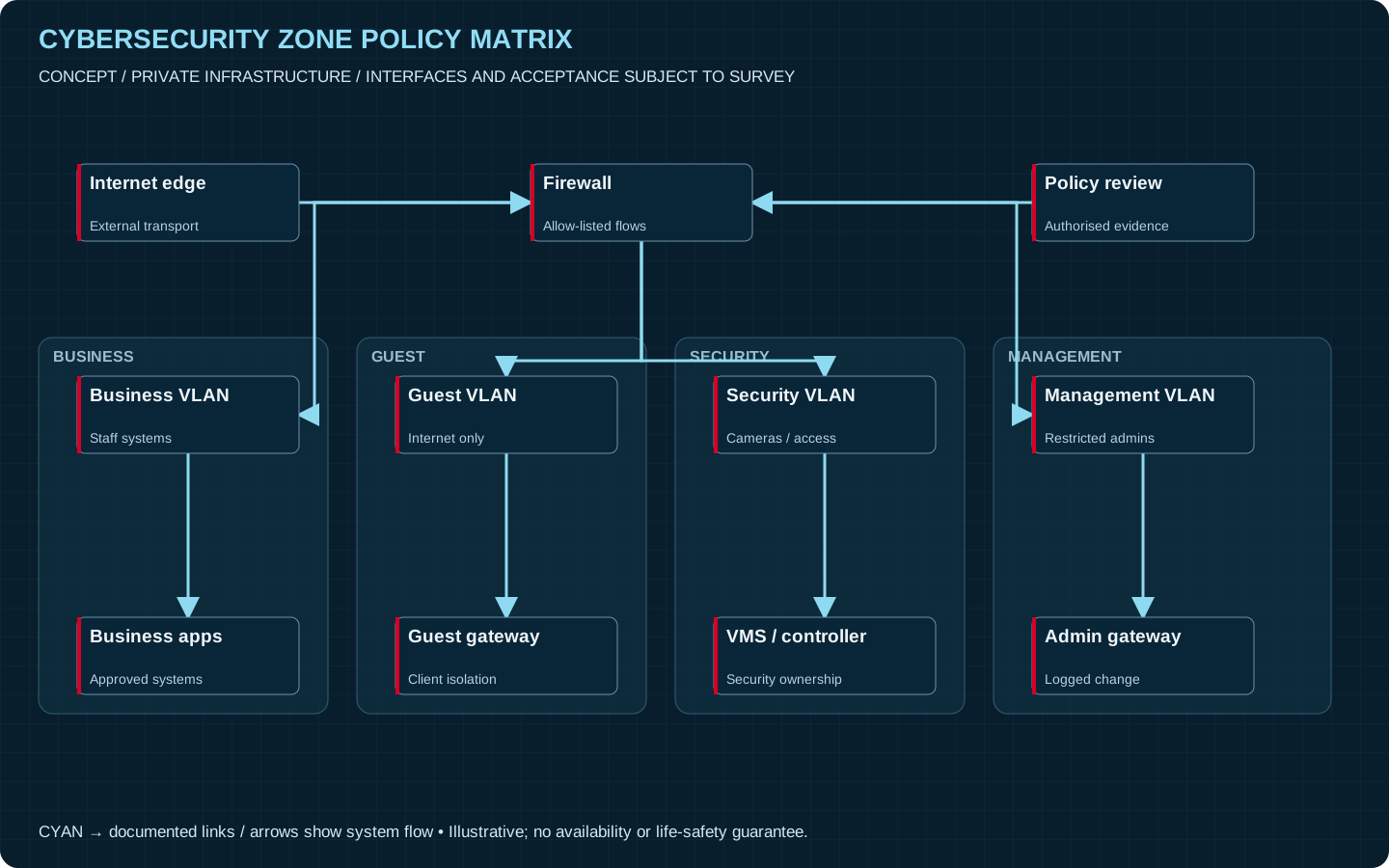
Cybersecurity zone policy matrix: Define allowed inter-zone paths rather than treating all connected devices as one LAN.
Define allowed inter-zone paths rather than treating all connected devices as one LAN. Illustrative design, subject to survey. Enlarge schematic · Swipe to inspect; tap to enlarge.

Project delivery across Maryland, USA

Access control

Door hardware, credentials and controller interfaces require separate acceptance checks.

Illustrative service sequence; not a completed local project.

Read the video description

Access control. Door hardware, credentials and controller interfaces require separate acceptance checks.

Vessel cabling

Onboard routes, cabinets and shore connectivity require vessel-specific coordination.

Illustrative service sequence; not a completed local project.

Read the video description

Vessel cabling. Onboard routes, cabinets and shore connectivity require vessel-specific coordination.

PROPERTY READINESS / ACCEPTANCE EVIDENCE

A controlled change, with an accountable handover

Coordinate Capital Region facility permissions independently of Baltimore freight appointments. Confirm exact buildings and retained uplinks before visits.

Questions shaped by Maryland, USA projects

What should a Baltimore port-related commercial property enquiry include?

Baltimore combines offices, industrial-commerce and port-linked logistics. Goods-yard CCTV and tenant networks need different operator and landlord permissions. Send the exact address, drawings or route photographs, retained equipment details and the permitted work period. These establish the survey boundary and installation prerequisites; a city coverage statement alone does not confirm attendance.

How should it infrastructure and equipment rooms be scoped for Frederick?

Frederick’s life-science and technology-business context needs controlled work areas. Commercial networks should preserve separately owned specialist facility systems. Define the private links and devices included, the authorised site contacts and the acceptance evidence. Repairs, upgrades and a new installation can have different retained-system dependencies, so identify what must stay operational.

Why does “Life-science business boundaries and freight workflows” matter to this project?

Rockville and Gaithersburg commercial IT can require dense copper and controlled administration without ownership of laboratory or process systems. Baltimore warehouses need scanner and loading tests. Shore-side routes add exposure and access concerns only where applicable. Keep security notifications separate from certified life-safety responsibilities. The proposal should turn these conditions into explicit survey, equipment and commissioning requirements rather than assume all premises share one design.

Can a programme combine Baltimore with Bowie?

Coordinate Capital Region facility permissions independently of Baltimore freight appointments. Confirm exact buildings and retained uplinks before visits. Shared test formats should retain local work-area restrictions and separate security-interface acceptance. Confirm the address list and permitted work at each property. Project deployment does not imply permanently based technicians, immediate attendance or an automatic ongoing maintenance contract.

What acceptance evidence is useful for private fibre infrastructure in Maryland, USA?

Agree the test boundary before work starts. Fibre handover should identify cores, terminations and agreed loss tests. Keep private-backbone acceptance separate from carrier availability and retained switch configuration. Bowie adds regional commercial offices and property. Guest wireless and branch access should follow the building’s own customer permissions.

Which security or connectivity additions suit Bowie commercial office?

Bowie adds regional commercial offices and property. Guest wireless and branch access should follow the building’s own customer permissions. Tenant routes, shared risers and desk or meeting-room changes need building approval. Plan cutovers around the business services that must remain available. CCTV, supported analytics, access control or backup connectivity can be assessed against that workflow. Confirm interfaces, power and authorised administration. Video fire or heat indications are supplementary and do not replace certified life-safety systems.

Plan your Maryland, USA installation

Send the site addresses, existing infrastructure, required services and permitted work windows. IS Security can review the scope, survey prerequisites, deployment feasibility and handover requirements for your project.

Discuss your Maryland project